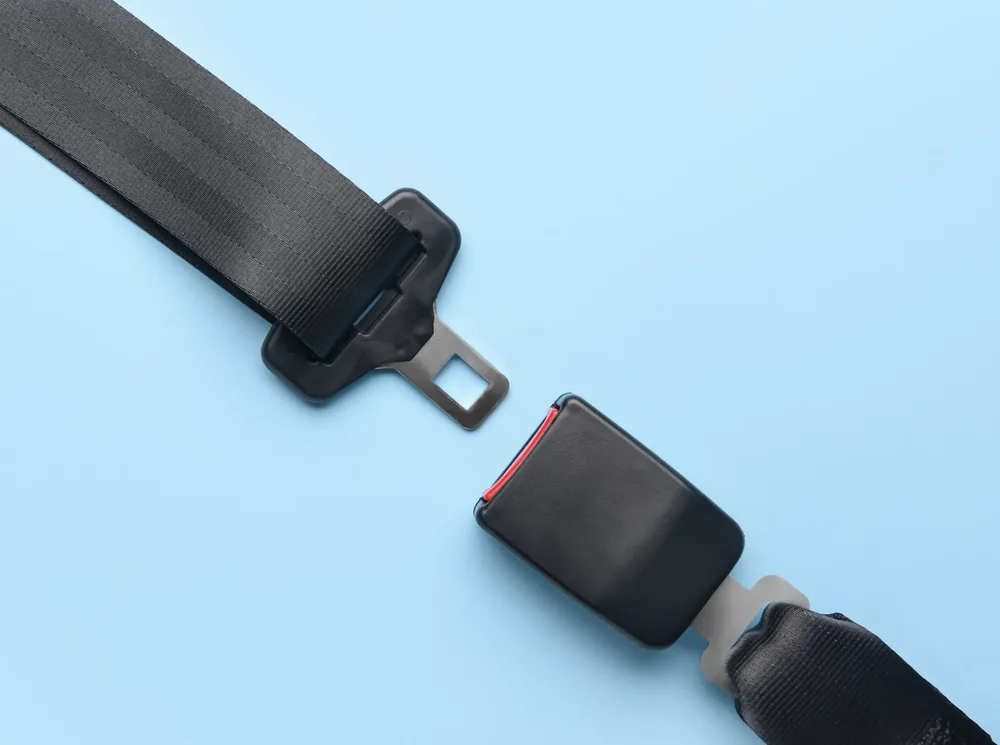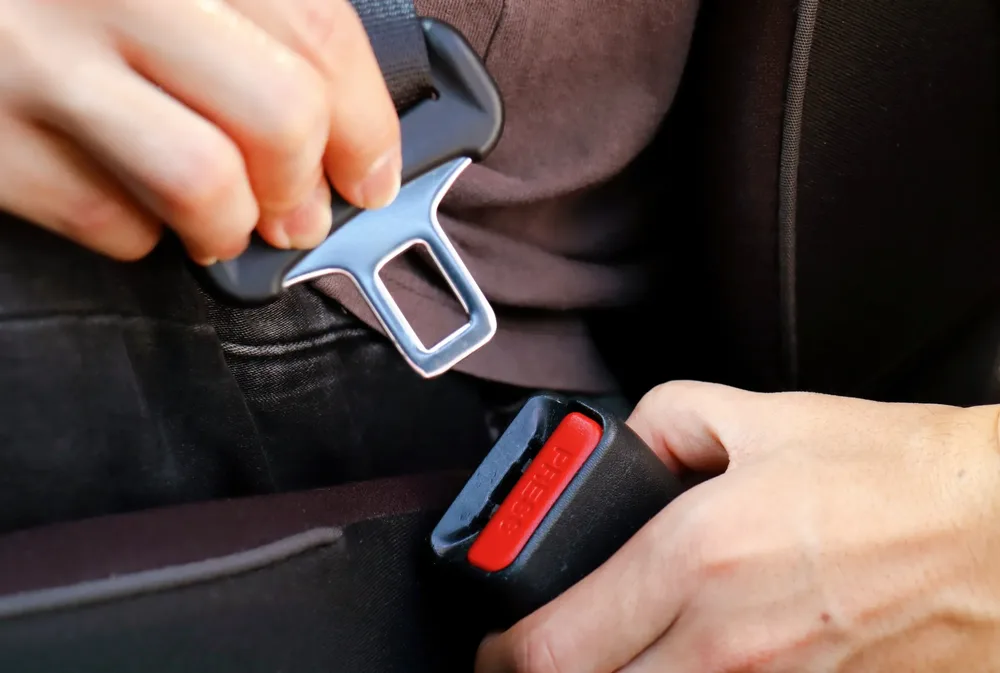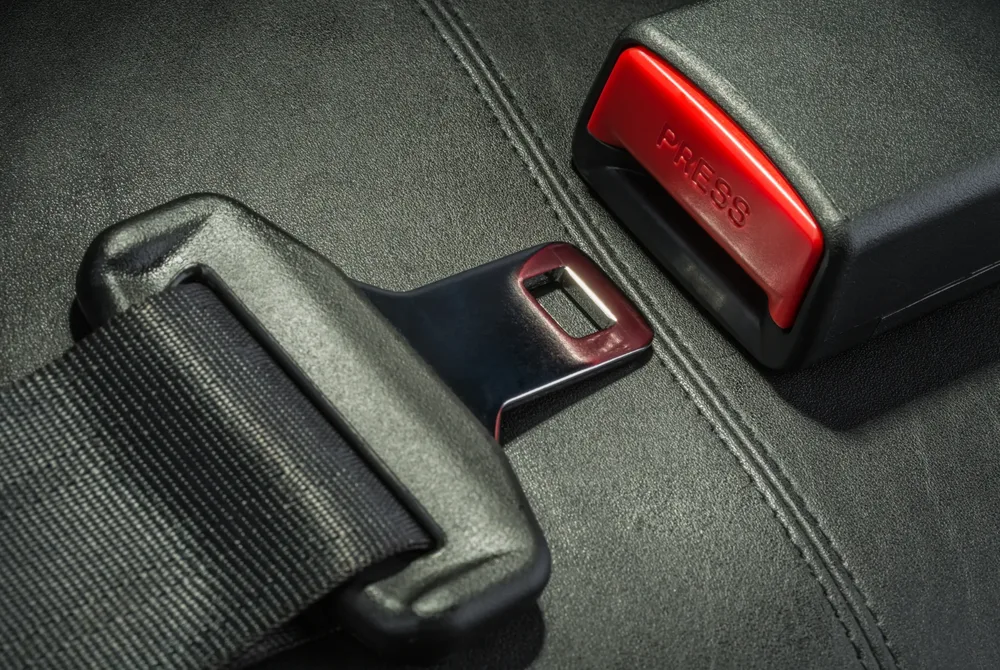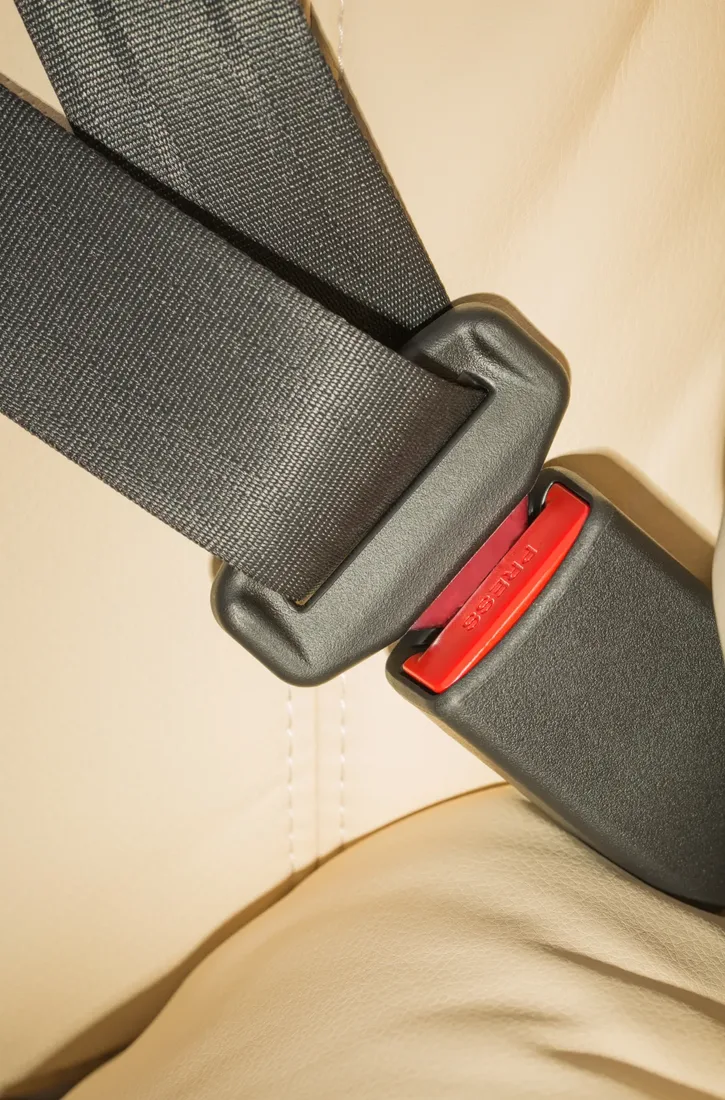
Of all the components in a seat belt, webbing is the one that carries the occupant. Everything else routes it, holds it, releases it or ties it to the vehicle. It is also the component most often taken for granted — a strap is a strap. But the reasons woven webbing is used, and the reasons its construction is specified rather than assumed, explain a good deal about how restraint systems behave.
Why woven webbing, specifically
Restraint webbing has to satisfy a demanding and slightly contradictory set of requirements at once:
- Carry substantial tensile load without failing.
- Extend in a controlled way rather than being rigid.
- Present a broad face so load is spread across an area, not a line.
- Be flexible enough to store compactly and move with an occupant.
- Run repeatedly through hardware without abrading itself away.
- Be comfortable enough against the body that people willingly wear it.
- Be producible consistently in long, uniform lengths.
Woven textile webbing satisfies all of these simultaneously, which is a genuinely unusual combination. A steel cable would be strong but rigid, narrow and unpleasant. A wide rigid band would spread load but could not be stored or worn. The weave is what reconciles the list.
Controlled extension and why rigidity is wrong
It is counter-intuitive, but a completely rigid restraint would be undesirable even if it were practical. A degree of controlled extension under load changes how the restraining force is delivered over time.
Consider the difference between stopping a moving mass abruptly against something immovable and stopping it over a slightly longer distance. Extending the distance over which the change in motion occurs reduces the peak force involved. Webbing that extends in a controlled way contributes to that effect; webbing that did not extend at all would deliver a sharper load.
This behaviour is a property of the material and the weave. It is one of the reasons restraint webbing is a specified product rather than any strong strap of similar appearance — the extension characteristic is part of what it is for.
Contact area and load distribution
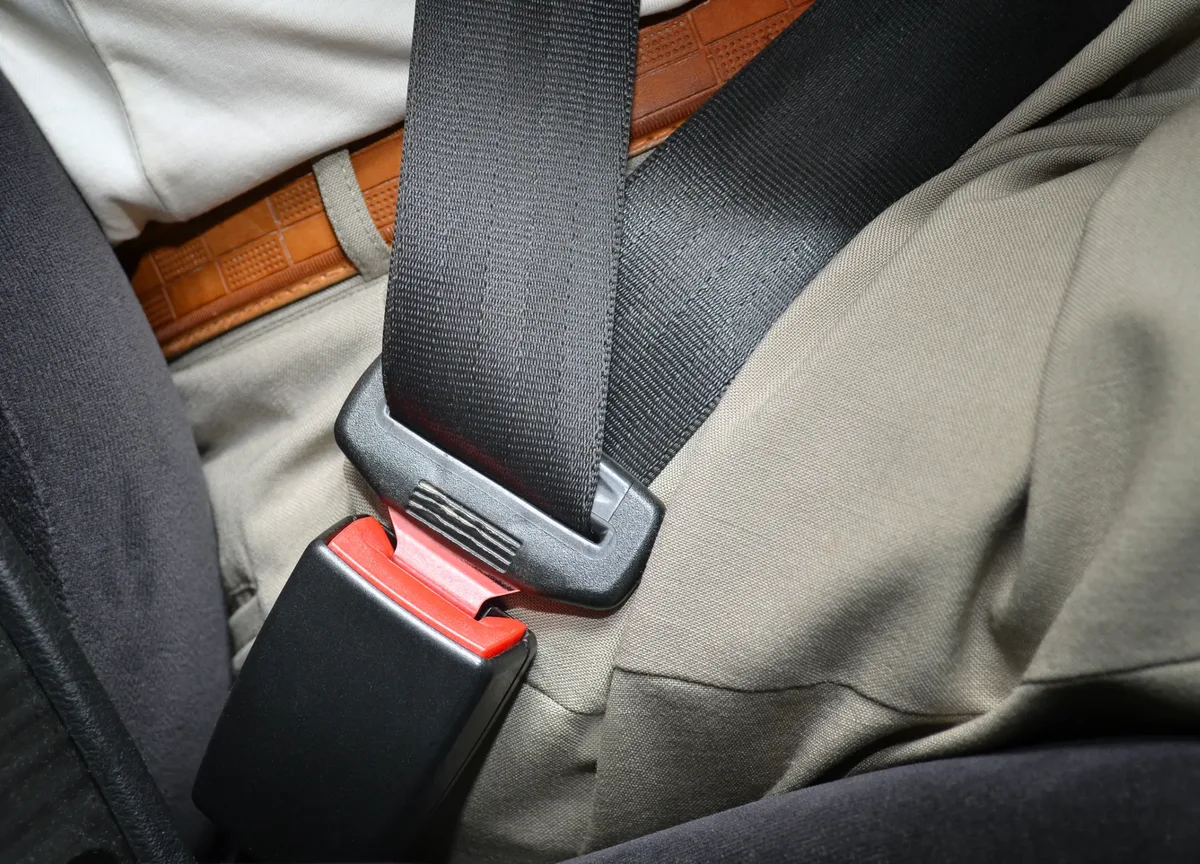
The second reason for a woven band is geometric. A restraint carrying load through a narrow cord would concentrate that load along a narrow line of contact with the body. A broad band spreads the same load over a considerably larger area.
This is why belts are the width they are. It is also why webbing lying flat matters so much in practice, and why a twist is more than a cosmetic annoyance. A twisted section presents a narrower effective contact face, concentrating load exactly where the design intends to spread it.
What weave construction changes
Two lengths of webbing of identical width can behave quite differently depending on how they are woven. Weave construction influences several practical characteristics.
Extension behaviour
How the webbing extends under load is substantially a function of weave structure and how the yarns are arranged, not of fibre alone.
Surface behaviour
How smoothly webbing runs through a guide loop or tongue plate slot depends on its surface. Rougher webbing generates more friction at every contact point, which affects how easily the belt is drawn out and how quickly it abrades where it passes through hardware.
Edge condition
The edges take a disproportionate share of wear because they contact hardware apertures directly. Edge construction affects both durability and how the band behaves as it feeds through a slot.
Handle and comfort
How the webbing feels — its stiffness, its texture against clothing and skin — affects whether occupants position it correctly or push it aside. It is a soft-sounding property with a hard consequence.
Width: the first compatibility constraint
Of everything in a webbing specification, width has the most immediate practical consequence, because webbing has to pass through the hardware in its belt path.
Webbing that is too wide for a guide aperture or tongue plate slot will bind, feed unevenly and abrade at those contact points. Webbing that is too narrow may not sit correctly in the hardware, allowing it to shift or bunch where it should lie flat and stable.
When someone asks whether a piece of webbing is compatible with an assembly, width is almost always the first thing to establish — and often the thing that settles the question.
This is why webbing is specified alongside the hardware it will run through rather than in isolation. The component interfaces article covers this relationship in more detail.
Webbing against hardware
Webbing spends its working life in contact with hardware: passing through guide loops, sliding through tongue plate slots, winding onto and off a retractor spool. Each of these is a place where a textile band and a formed component rub against each other thousands of times.
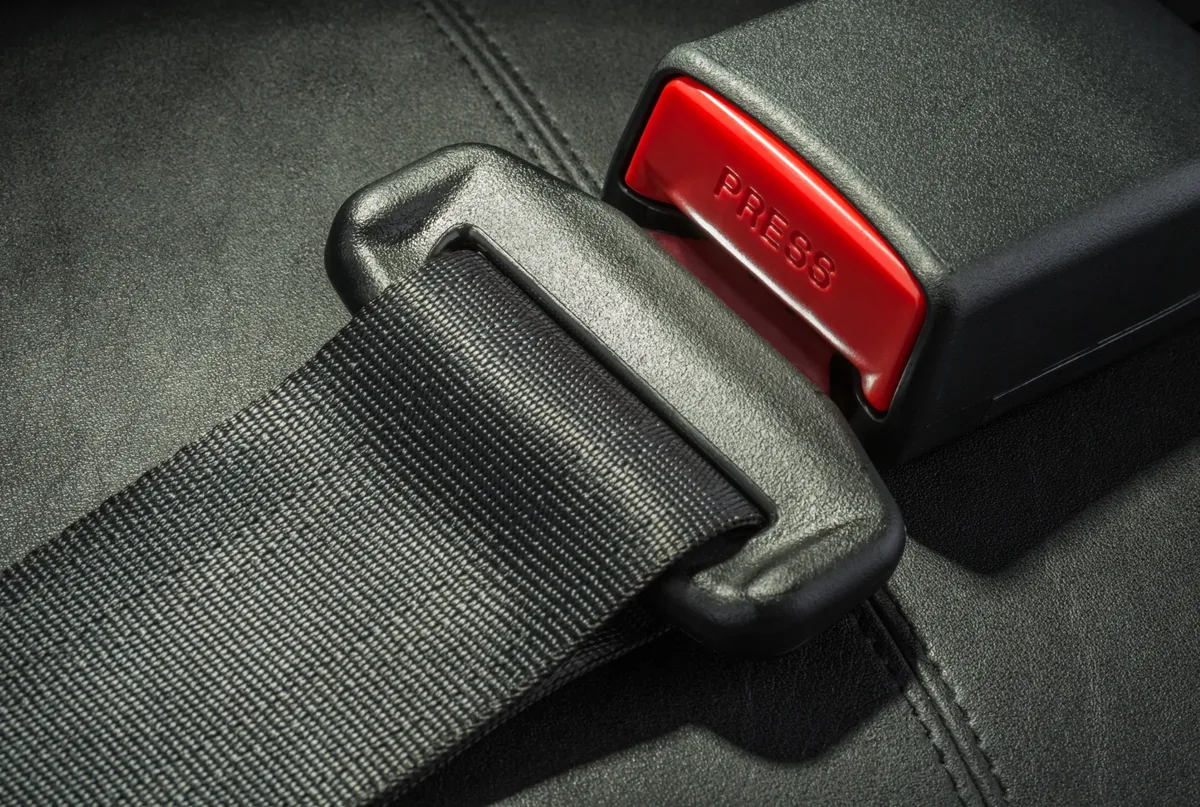
Two design consequences follow. First, hardware apertures need edges that guide webbing without cutting into it; a sharp or burred edge will damage a band it would otherwise simply carry. Second, wear will concentrate at these contact points rather than distributing evenly along the belt — which is precisely why a visual inspection should draw the belt fully out and look at the sections that are normally hidden inside the retractor or behind trim.
Condition, wear and what it tells you
Webbing has an advantage over most restraint components: much of its condition is visible. Cuts, fraying, pulled threads, hardened or contaminated areas and localised wear are all things a person can see.
That visibility is genuinely useful, and it has a firm limit. Visible condition does not tell you about load-carrying capability, and it does not reveal whether webbing has been subjected to an event that left no external mark. Contamination is a particular case worth flagging: some substances can affect webbing in ways that are not proportionate to how they look, which is why cleaning methods should follow the vehicle manufacturer’s guidance rather than general household practice.
Two rules hold regardless of appearance. Webbing should never be cut, stitched, shortened, knotted or otherwise modified — any alteration changes the load path in ways that cannot be assessed by looking. And damaged webbing is a replacement matter, not a repair matter. Our quality and engineering page covers inspection awareness and its limits in more depth.
Frequently asked questions
Restraint webbing is a woven textile band, selected for a combination of tensile strength, controlled extension under load, broad contact area, flexibility and consistent production in long lengths. Specific fibre types, constructions and finishes vary by product and application and are defined as part of a specification rather than generalised.
A broad band spreads load across a wide contact area. A twist presents a narrower effective face, concentrating load where the design intends to distribute it, and it changes how the belt sits against the occupant. The belt still functions, which is exactly why the condition is easy to overlook.
No. Cutting, stitching, shortening, knotting or otherwise modifying webbing alters the load path in ways that cannot be assessed visually. Damaged webbing should be replaced, not repaired, following the vehicle manufacturer’s guidance for that system.
Width is the first constraint — the webbing has to pass correctly through the guide loops and tongue plate slots in that belt path. Beyond width, construction and finish affect how it runs and wears. Webbing should be specified alongside the hardware it will run through, not on its own.
A note on scope
This article provides general educational information about seat belt systems and their components. It does not constitute regulatory, safety or engineering certification advice for any specific vehicle. For any particular vehicle or restraint system, the manufacturer’s own documentation, inspection guidance and replacement criteria are the authoritative source and should always be followed.