Precision manufacturing for the systems that support vehicle safety

Seat Belt Manufacturing Company Enquire

Quality & engineering

Suitability, integration, consistency — in that order.

Quality in restraint hardware is less about a label and more about a sequence of judgements. This page sets out the judgements that matter and the reasoning behind each one.

Covered here
Suitability, compatibility, integration, consistency, inspection awareness, maintenance
Guiding rule
Manufacturer guidance for a specific vehicle or system always takes precedence over general advice
Not claimed
No certifications, approvals, crash-test ratings or regulatory compliance claims are made on this site

The premise

A restraint component can be well made and still be the wrong answer.

This is the distinction that sits underneath everything else on this page. Manufacturing quality — whether a part matches its intended dimensions and finish — is necessary but not sufficient. Suitability is a separate question: does this part belong in this installation, connected to these components, used this way?

The two get conflated often, and the consequences are asymmetric. A part that is poorly made will usually announce itself: it will look wrong, feel wrong, or fail visibly. A part that is well made but unsuitable can install cleanly, latch confidently, and behave exactly like the correct component in every way an occupant would notice — while being connected into a load path it was never designed for.

That is why the sections below start with suitability and compatibility rather than with manufacturing. Getting the manufacturing right on the wrong component is a well-executed mistake.

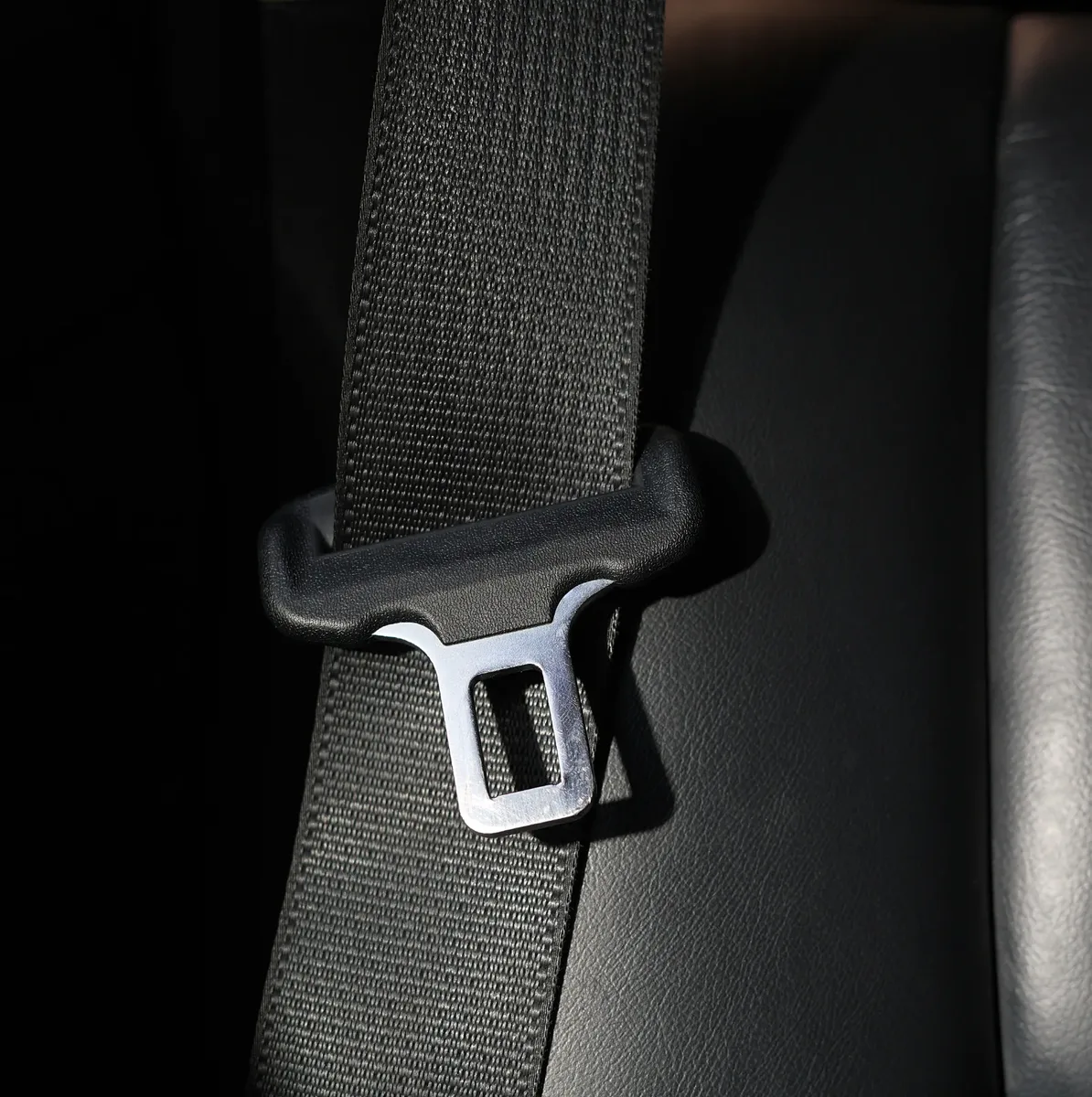
Metal seat belt tongue plate with its rectangular locking slot held in a moulded webbing guide

Fig. 01 — Slot geometry: a dimension an occupant can never assess, and the system depends on it

01 — Product suitability

Why “it fits” is not the same as “it is suitable”.

Restraint hardware has a characteristic that makes casual substitution unusually risky: components that were never designed as a pair will frequently still assemble. A tongue plate from one system may enter a buckle from another. Webbing of a slightly different width may still pass through a guide. The arrangement will look finished and sound normal.

What has changed is not visible. Engagement designed to occur at a specific point in the buckle mechanism may now occur slightly differently. Load intended to be transferred through a particular contact geometry may be transferred through another. None of this produces a symptom during ordinary use, which is precisely why it cannot be detected by ordinary use.

The practical response is simple discipline: establish what a component is designed to mate with, and confirm that the intended partner is what it is actually being connected to. Where that cannot be established with confidence, treat the pairing as unverified rather than assuming it is fine because it assembled.

In restraint hardware, “it went together” is not evidence. It is only the absence of one particular kind of evidence.

02 — Application compatibility

Five things the installation decides, whatever the catalogue says.

These are properties of the vehicle and the seating position rather than of the component — which is why they cannot be resolved from a product description alone.

  • 01Anchorage arrangementWhere the belt is secured to the structure, and how those points sit relative to the occupant, determines the geometry of the entire belt path. Two positions with identical hardware and different anchorage placement produce meaningfully different restraint geometry.
  • 02Seat construction and movementSeats that slide, recline or fold impose requirements that a fixed seat does not. The belt and its hardware must accommodate that movement without fouling, trapping or chafing at any point in the range.
  • 03Routing and clearanceTrim apertures, pillar geometry and the space around the seat govern where webbing can run and where guides can sit. A component that satisfies every functional requirement is still unsuitable if the belt cannot be routed cleanly to it.
  • 04Occupant variationThe range of people who will use the position affects how belt geometry should be arranged. A configuration comfortable for one occupant profile may sit awkwardly for another, and awkward belts get worn incorrectly.
  • 05Duty cycleHow often the belt is fastened, by how many different people, and under what conditions. High-cycle service places demands on hardware and webbing that a lightly used private vehicle never generates.

03 — Product integration considerations

Every interface is a designed relationship.

A seat belt is a series of handovers. Each one was designed deliberately, and each one deserves to be confirmed rather than assumed.

A

Webbing to hardware

Webbing must pass through guides and tongue plate slots smoothly, without binding and without abrading at the contact points. Width is the obvious constraint; surface behaviour and edge finish matter almost as much over the life of the belt.

B

Tongue to buckle

The most consequential interface in the system. Plate thickness, slot position and buckle mechanism geometry together determine whether engagement is positive and repeatable. These components should always be established as a matched pair.

C

Retractor to belt path

Mounting orientation and webbing exit direction have to agree with the intended routing, or the belt will not pay out and return the way it should.

D

Anchorage to structure

Mounting hardware ties the belt into the vehicle. This interface belongs firmly within the vehicle manufacturer’s guidance for the specific structure.

E

System to occupant

The final interface. If the belt is uncomfortable or awkward to fasten correctly, the system’s real-world performance suffers regardless of its engineering.

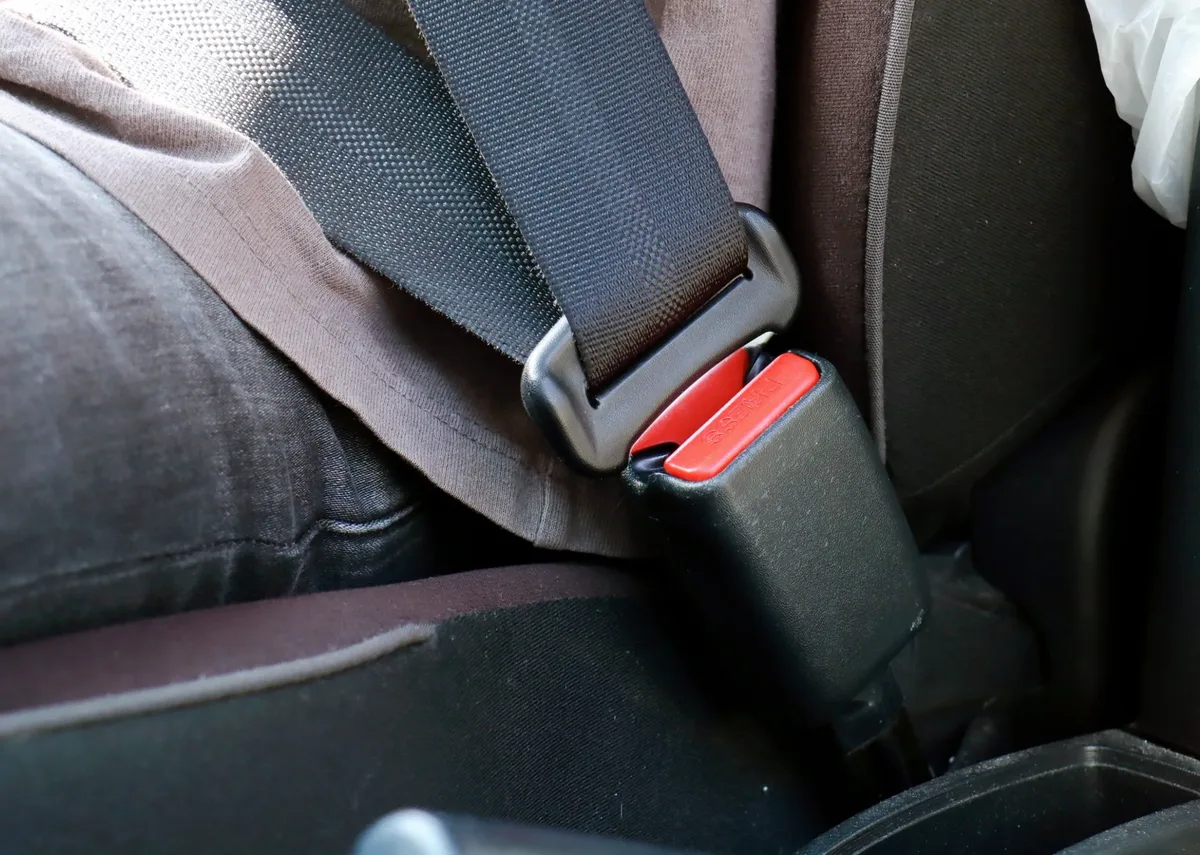
Seat belt buckle with red press release button shown alongside its mating tongue plate

Fig. 1b — The tongue-to-buckle interface, shown separated: the pairing most often assumed rather than verified

Why interface B deserves its own paragraph

Of the five interfaces above, the tongue-to-buckle pairing accounts for a disproportionate share of the problems we are asked about — and for a specific structural reason rather than through carelessness.

It is the only interface in the system that is made and broken by the occupant, several times a day, by hand. That means it is also the only one where a person receives direct feedback about whether it worked: a sound, a resistance, a sense of the tongue seating. Because that feedback exists, it is treated as confirmation.

But the feedback confirms only that something engaged. It does not distinguish between the engagement the pairing was designed for and a different engagement that happens to produce a similar sensation. Every other interface in the system is confirmed by inspection or by design records; this one has a convincing but incomplete substitute available, which is exactly what makes it easy to stop short.

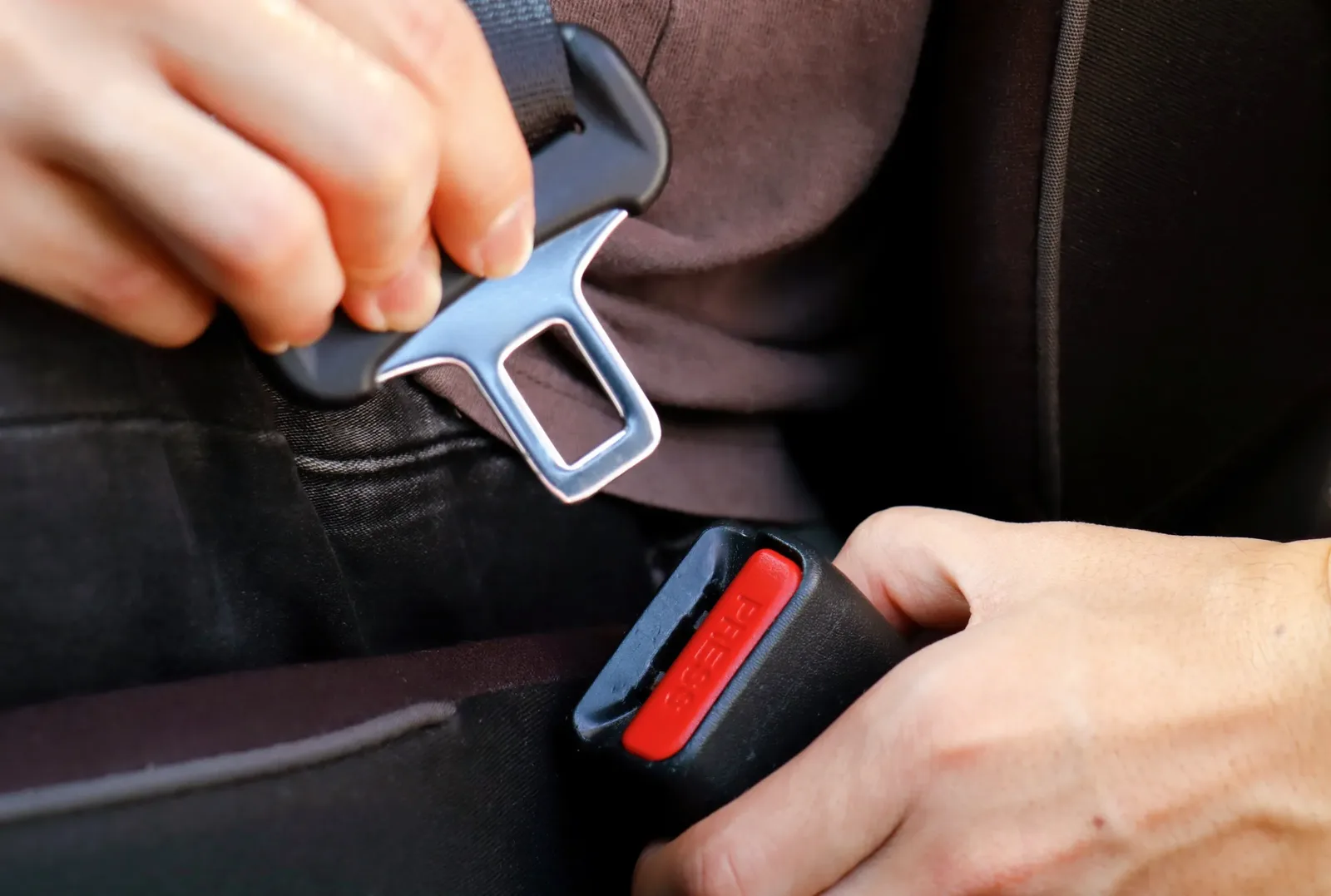
Close view of woven seat belt webbing and a metal tongue plate on a dark leather seat

Fig. 02 — Weave and hardware, the pairing that has to behave the same across every unit

04 — Consistency & reliability

Reliability is consistency observed over time.

These two words describe the same property from different distances. Consistency is whether units resemble one another now. Reliability is whether a unit resembles itself later. Both come from the same source: controlling variation deliberately rather than discovering it afterwards.

Consistency across a batch comes from stable component sourcing, a defined build sequence and verification against a written specification. It is worth noting what this rules out — that consistency can be achieved by inspection alone. Inspection at the end of a process can reject what is wrong, but it cannot make a variable process produce uniform output. It can only sort it.

Reliability over time depends on how components behave as they accumulate cycles. Webbing passes through the same guides thousands of times. Buckle mechanisms engage and release repeatedly. Moulded parts are handled, flexed and exposed to a cabin’s temperature swings. Selecting components with that trajectory in mind is a different exercise from selecting for day-one performance.

05 — Inspection awareness

What a routine visual check can reasonably tell you.

General awareness of belt condition is worthwhile, provided its limits are understood. A visual check identifies obvious deterioration. It does not assess internal condition or load-carrying capability.

Draw the belt fully out and look along the whole band, not just the part normally visible. Cuts, fraying, pulled threads, hardened or contaminated areas and localised wear at guide contact points are all visible conditions worth noticing. Damage often concentrates where webbing passes through hardware, which is precisely the section that stays hidden when the belt is retracted.

Webbing should lie flat throughout its run. A persistent twist changes how load distributes across the band and how the belt sits against the occupant, and it is easy to overlook because the belt still functions. Routing should also follow the intended path — through the correct guides, without fouling trim or seat mechanisms anywhere in the seat’s range of movement.

The tongue should seat positively, without needing to be hunted into position, and release should happen in one clear action. Hesitation, a need for repeated attempts, or a release that requires an unusual amount of force are all worth investigating rather than working around.

Webbing should pay out smoothly and return fully without assistance. A belt that returns sluggishly, stops short, or needs to be fed back by hand is behaving differently from how it was designed to, and that change is worth attention even though the belt still fastens.

Visible hardware should be undamaged, unbent and free from corrosion or sharp edges. Mounting points and covers should be secure. Anything loose, deformed or unusually worn should be assessed by someone qualified rather than adjusted informally.

A visual inspection cannot assess internal mechanism condition, cannot evaluate load-carrying capability, and cannot determine whether a system has been affected by an event that left no external trace. Where there is any doubt about a restraint system’s condition or history, it should be assessed by a qualified person in line with the vehicle manufacturer’s guidance.

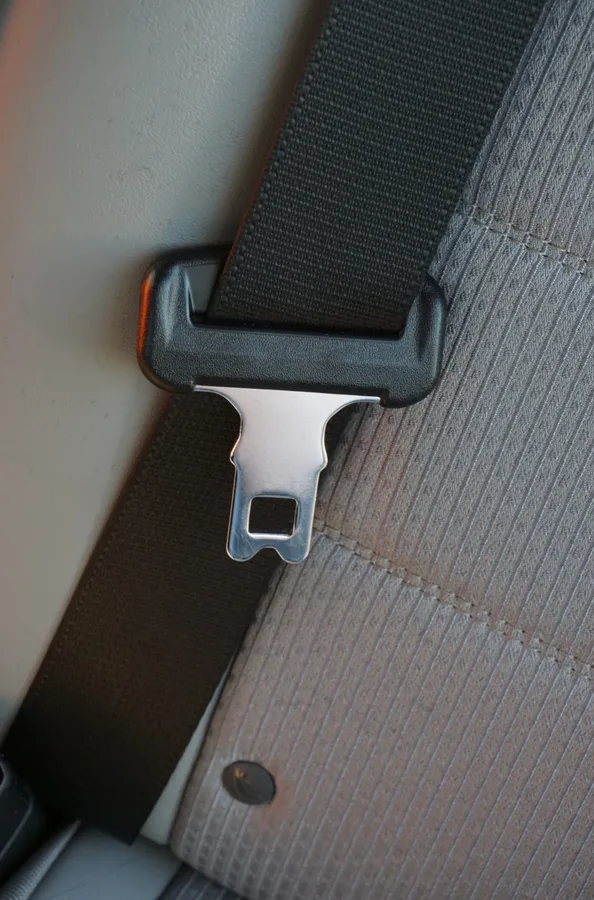
Installed seat belt fastened into its buckle in a vehicle seating position

Fig. 03 — The installed system, where visual checks are actually carried out

Seat belt routed across the shoulder and chest of a seated occupant in a vehicle

Fig. 04 — Correct routing across the occupant is part of the system working as intended

06 — Maintenance considerations & manufacturer guidance

General good practice, and where it stops.

Restraint systems need little routine attention, but the little they need is worth doing properly — and knowing when to stop and refer is part of doing it properly.

  • 01Keep webbing clean and dryContamination stiffens webbing and can accelerate abrasion where it passes through hardware. Cleaning methods should follow the vehicle manufacturer’s guidance — some cleaning agents are unsuitable for restraint webbing.
  • 02Do not modify or repair webbingCutting, stitching, shortening, knotting or otherwise altering webbing changes the load path in ways that cannot be assessed visually. Damaged webbing is a replacement matter, not a repair matter.
  • 03Keep the belt path clearObjects trapped in the buckle, obstructions in the belt run, or trim that has shifted into the path all interfere with correct operation and are easy to overlook once you stop noticing them.
  • 04Follow manufacturer guidance for the specific systemVehicle and system manufacturers publish inspection intervals, replacement criteria and service requirements for their own products. Where such guidance exists, it takes precedence over any general advice — including everything on this page.
  • 05Refer anything uncertain to a qualified personIf a system’s condition, history or correct configuration is unclear, that uncertainty is itself the finding. It should be resolved by someone qualified to assess restraint systems rather than reasoned away.

What this page does not claim

This page provides general educational information about seat belt component suitability, integration and condition awareness. It does not constitute regulatory, safety or engineering certification advice for any particular vehicle or system.

No claims are made anywhere on this website regarding ISO or other certifications, government approvals, crash-test ratings, published safety test results or regulatory compliance status. Where a project requires evidence of a particular standard, process or evaluation, that requirement is defined and agreed as part of the project scope.

For any specific vehicle or restraint system, the vehicle manufacturer’s own documentation, inspection guidance and replacement criteria are the authoritative source and should always be followed.
Start a conversation

Not sure whether a component belongs in your installation?

That is a good question to ask before fitting rather than after. Send us what you know about the position, the interfaces and what is currently there — we will tell you plainly what can and cannot be established from it.