Precision manufacturing for the systems that support vehicle safety

Seat Belt Manufacturing Company Enquire

Manufacturing

Built the same way, every time — because that is the whole point.

A walk through how seat belt products are approached here: what gets considered, in what order, and why each stage exists.

Stages
Six, from requirement understanding through to application support
Principle
Define the configuration before building it; verify the build against the definition
Scope note
Describes approach, not specific machinery, test procedures or certifications

01 — Introduction to the approach

Manufacturing a seat belt is mostly an exercise in removing variation.

The individual operations involved in producing a restraint assembly are not exotic. What makes the work demanding is the requirement that they produce the same result on the first unit, the fiftieth, and the five hundredth.

That framing changes what you optimise for. It is less about a single impressive operation and more about controlling the accumulation of small differences — a component sourced slightly differently, a build step performed in a different order, a routing decision made by feel rather than by definition. Individually, none of them looks significant. Collectively they are what separates a product that behaves predictably from one that mostly does.

So the manufacturing approach described on this page is organised around definition and verification. Define the configuration precisely enough that it can be built repeatedly; verify what was built against that definition. Everything else follows from those two commitments.

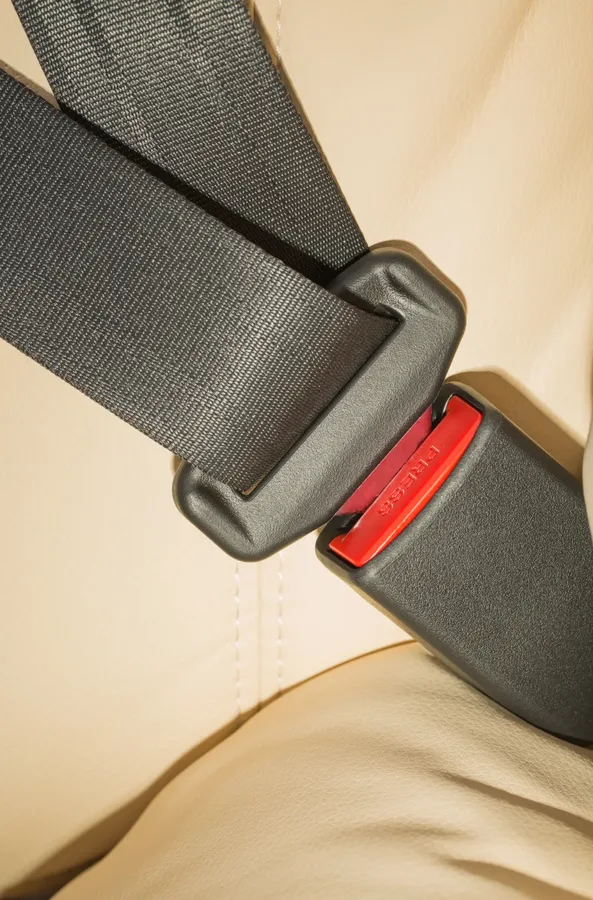
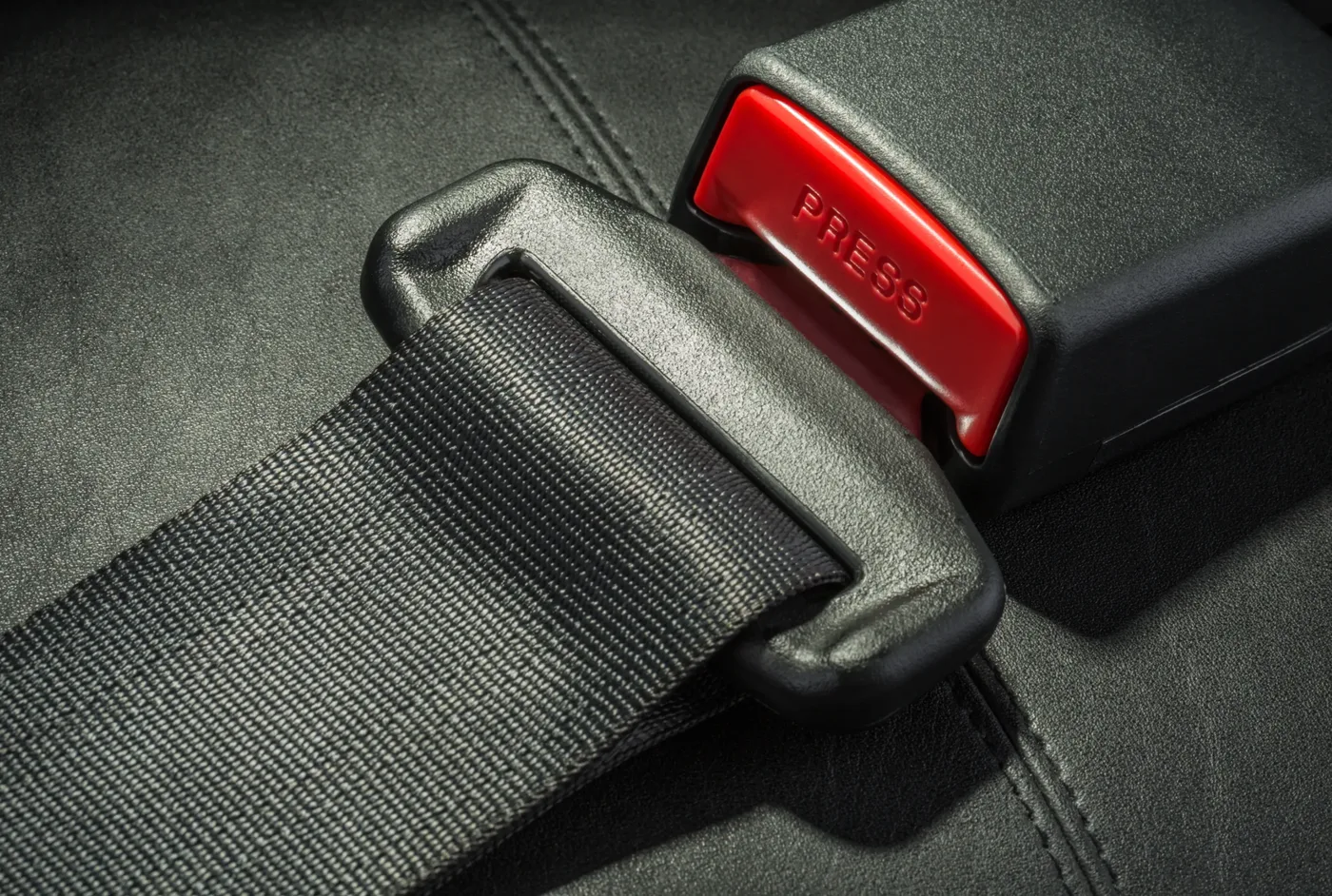
Seat belt webbing feeding through a moulded guide into a buckle assembly with a red release button

Fig. 01 — The webbing-to-buckle interface, where several specification decisions meet at once

02 — Engineering considerations

What has to be true before a component is a candidate.

These are the questions worked through while a configuration is still being decided — the point at which changes are inexpensive and consequences are still reversible.

A

Load path continuity

A seat belt is a continuous route from anchorage to anchorage. Every element in that route — webbing, guide, tongue plate, buckle, mounting hardware — participates in carrying load. A configuration is only sound if that continuity is unbroken and every interface along it is a designed one.

B

Geometry in the installed position

Belt behaviour depends on where the anchorages sit relative to the occupant and to each other. Geometry that works in one seating position may place the belt awkwardly in another. This is why installed geometry, not component dimensions alone, drives selection.

C

Mating interfaces

Tongue to buckle, webbing to guide, retractor to belt path. Each pairing is a designed relationship that has to be confirmed rather than presumed.

D

Envelope & clearance

Components have to physically fit — around trim, through pillar apertures, alongside seat travel and folding mechanisms — without fouling or chafing.

E

Duty expectations

How often will it be fastened? By how many different occupants? A high-cycle environment places different demands on the same component family.

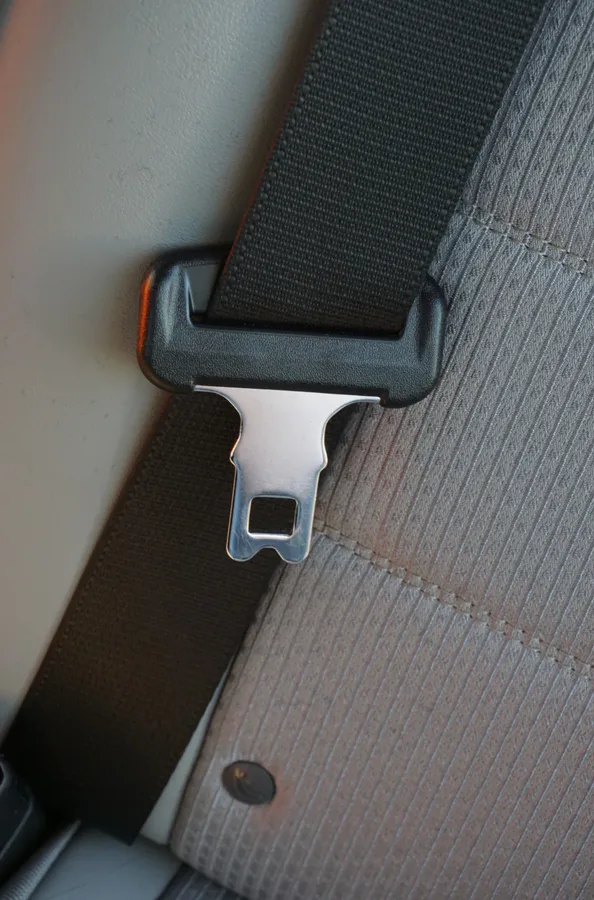
Seat belt webbing routed through a moulded guide loop above a light coloured vehicle seat

Fig. 1b — Routing through a guide: a detail that looks incidental and governs how the belt wears

Where these considerations meet

A guide loop is a useful illustration of why these five points are worked through together rather than separately. The aperture has to accept the specified webbing width without binding — that is an interface question. Its position determines where the diagonal section crosses the occupant — that is a geometry question. It has to clear surrounding trim and any seat movement — that is an envelope question. And because webbing passes through it on every fastening, it is one of the places where duty expectations turn into measurable wear.

One small moulded component, and four of the five considerations apply to it at once. This is fairly typical of restraint hardware, and it is the reason a configuration is reviewed as a whole rather than component by component.

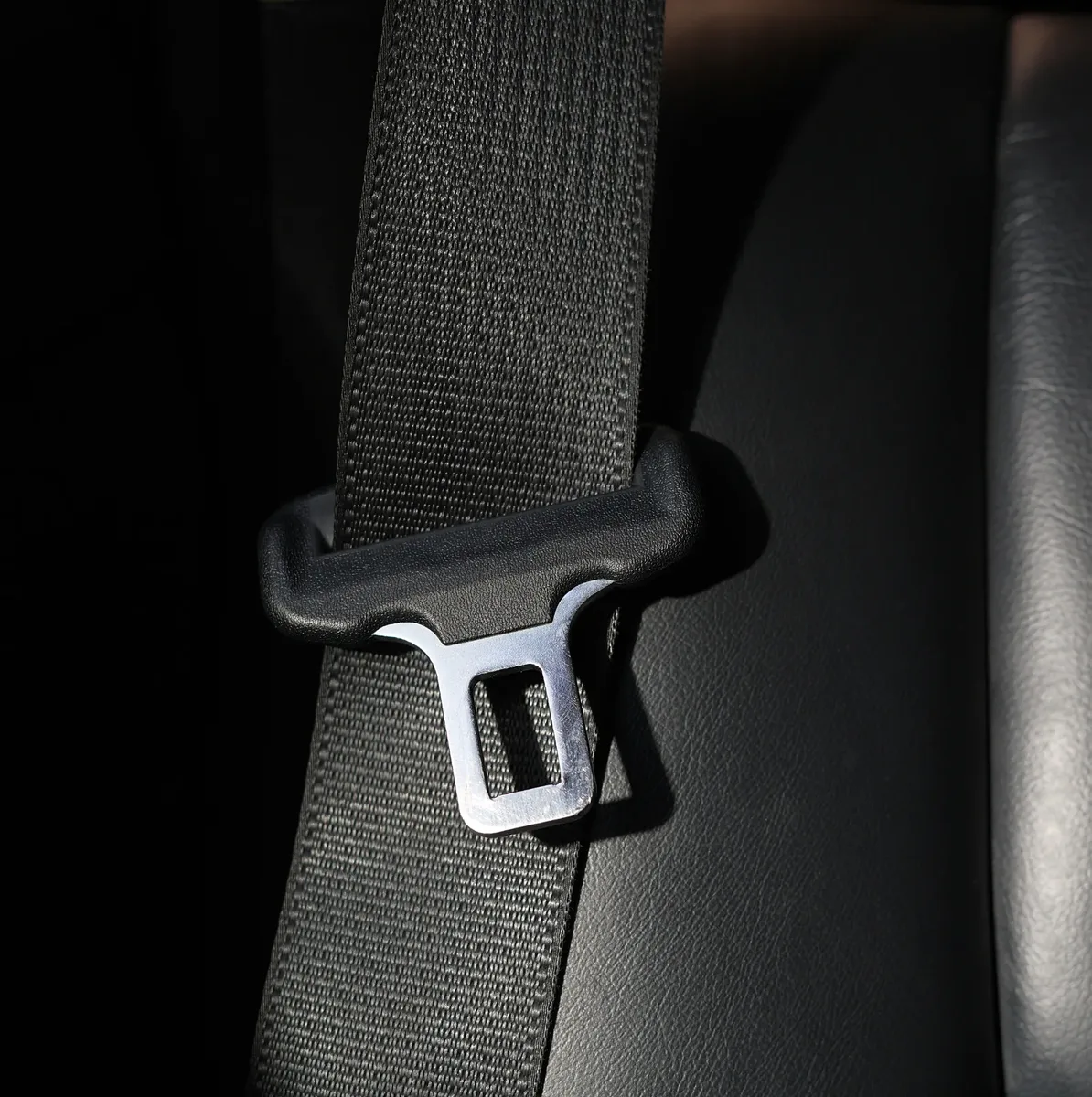
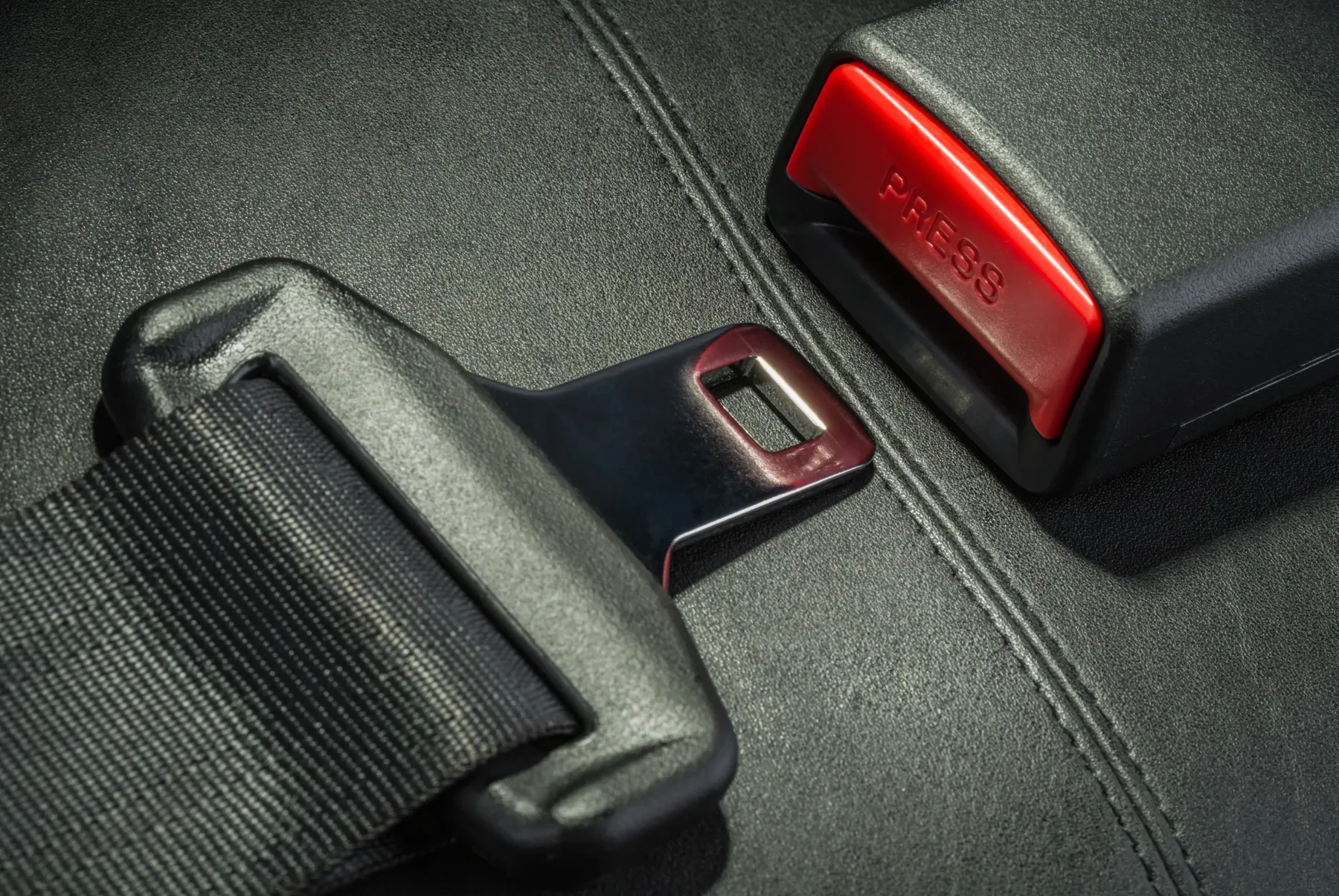
Close view of woven seat belt webbing and a metal tongue plate against a dark leather surface

Fig. 02 — Woven webbing and formed metal: two very different materials sharing one load path

03 — Materials and components

Three material families, three different sets of behaviour.

A seat belt assembly brings woven textile, formed metal and moulded polymer into one product. Each behaves differently under load, temperature and repeated handling — and the assembly has to accommodate all three.

  • 01Woven webbingChosen because it combines high tensile capability with a degree of controlled extension, and because a broad woven band spreads load across a wide contact area rather than concentrating it. Weave construction, width, edge finish and surface behaviour all matter — webbing has to run cleanly through guides and plates without snagging or abrading.
  • 02Formed metal hardwareTongue plates, anchor fittings and internal buckle components carry concentrated load and define engagement geometry. Their form, thickness and finish determine both how they perform structurally and how they feel to an occupant handling them by touch alone.
  • 03Moulded polymer partsBuckle housings, release buttons, guide loops and covers give the system its usability. They have to hold form and function across the temperature range a vehicle interior genuinely experiences, and they take the majority of the everyday handling.

On material specifications

Specific material grades, coatings, weave specifications and mechanical values depend on the configuration being discussed. Where a project requires these to be defined and documented, they are established together with the requirement rather than generalised in advance.

04 — Seat belt assembly concepts

The six stages, in the order they actually happen.

Each stage exists to answer a question the next stage depends on. Skipping one does not remove the question — it simply defers it to a point where answering it costs more.

Requirement Understanding

Establish the application before anything else is discussed.

Vehicle type, seating position, anchorage arrangement, belt routing, available space and expected duty cycle. Where an existing component is being replaced, identifying exactly what is currently fitted is part of this stage. The output is a shared understanding of what the product has to do, expressed in terms both sides recognise.

Material & Component Consideration

Choose parts in relation to each other, not individually.

Webbing construction and width, hardware form, moulded components and the interfaces between them are considered together. A tongue plate is reviewed against the buckle it must mate with; webbing is reviewed against the guides and plates it must pass through. Compatibility is confirmed at this stage, not assumed.

Product Development / Selection

Translate the requirement into a defined configuration.

Where an existing arrangement fits the application cleanly, that is the sensible answer. Where it does not, a considered adaptation is worked through. Either way, the result is a written configuration — components, arrangement, routing — that can be agreed before production begins.

Assembly & Manufacturing Process

Build to a defined sequence so that units resemble one another.

Components are brought together following an established order and orientation. A defined sequence is not bureaucracy; it is the mechanism that removes an entire category of variation — belts routed differently, hardware oriented inconsistently, components fitted in an order that makes an error easy.

Quality-Focused Evaluation

Review the finished product against the agreed specification.

Correct components present, correct configuration, engagement and release behaving as intended, webbing running cleanly, workmanship consistent with what was defined. Anything that does not match the specification is addressed before the product moves forward.

Delivery & Application Support

Stay available once the product is in the vehicle.

Questions about fitment, component identification, routing or compatibility do not stop at dispatch — and they are often at their most useful during installation. Support continues into that phase rather than ending with supply.

Metal seat belt tongue plate with locking slot seated in its moulded webbing guide

Fig. 03 — Slot position and plate profile: dimensions that define engagement quality

05 — Precision and consistency

Two words that are often used together and mean different things.

Precision is about hitting the intended dimension. Consistency is about hitting it again. A process can be precise on a good day and inconsistent across a batch; it can also be consistently a little off. Restraint hardware needs both, and they are pursued differently.

Precision comes from understanding which dimensions actually matter functionally. Not every measurement on a drawing carries equal weight. On a tongue plate, the position of the locking slot relative to the plate edge, and the plate thickness at that point, do far more work than the outline profile. Knowing which dimensions are functional lets attention go where it changes the outcome.

Consistency comes from stability elsewhere: sourcing the same components rather than equivalent-looking substitutes, following a defined build sequence rather than an improvised one, and checking output against a specification rather than against memory. It is unglamorous, and it is the part that most affects what the customer actually experiences.

A process that is precise but inconsistent produces good units and bad ones. Only the bad ones matter.
06 — Quality-focused processes

What gets looked at, and why it is worth looking at.

Review is most valuable when it is specific. These are the checks that repay the time they take.

The most consequential errors are rarely subtle failures — they are the wrong part fitted, or the right parts arranged differently from the agreed configuration. Confirming component identity and arrangement against the specification catches the problems that are hardest to detect once the product is installed.

The tongue should seat positively and without ambiguity, and release should happen in one clear action. Both need to feel the same across units — an occupant builds an expectation from the belts they use, and a component that behaves differently invites hesitation at exactly the wrong moment.

Webbing should be clean, untwisted, correctly oriented and free from damage at the points where it passes through guides and plates. Twisted webbing is a common and easily missed condition: it changes how load is distributed across the band and how the belt sits against the occupant.

Formed and moulded parts should be free from deformation, burrs, sharp edges and moulding defects — partly for structural reasons, and partly because anything that catches on webbing or on an occupant’s hand becomes a durability and usability problem over time.

Units from the same batch should be comparable to one another in the ways that matter — the same components, the same routing, the same engagement feel. Batch-level comparison catches drift that unit-level inspection can miss entirely, because a slow shift looks acceptable at every individual step.

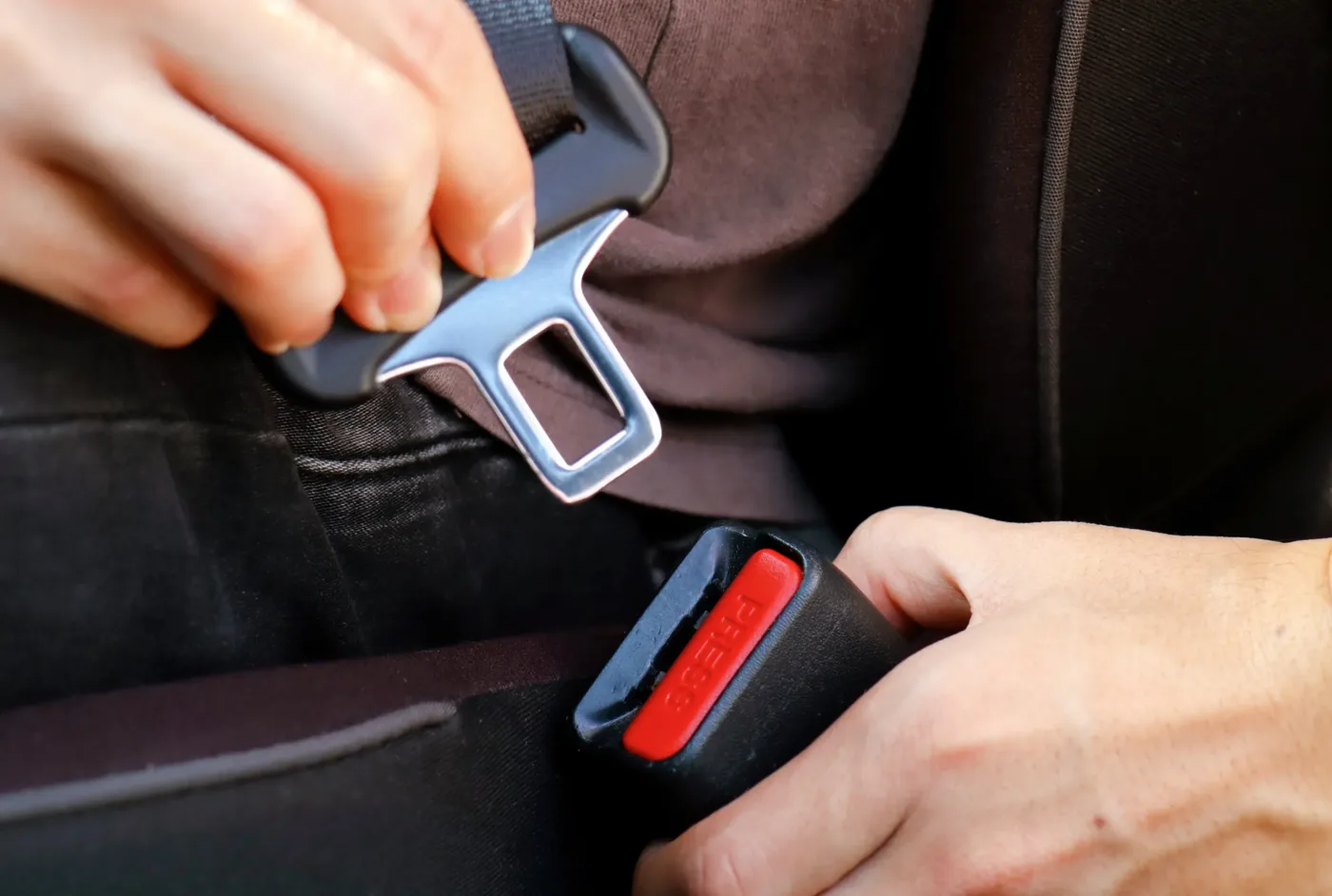
Hands guiding a seat belt tongue plate towards a buckle in a vehicle seating position

Fig. 04 — Engagement in the installed position: the final arbiter of every earlier decision

07 — Application requirements

The vehicle sets constraints that no catalogue can anticipate.

Application requirements are the reason two installations that look similar can need different answers.

Anchorage arrangement determines belt geometry. Seat construction determines what the belt has to clear and how it moves when the seat does. Interior trim determines routing and where guides can sit. Occupant profile influences comfort and correct positioning. Duty cycle influences how much handling the hardware will see over its life.

None of this is visible in a part specification, which is why application requirements are treated as an input to product selection rather than a detail to be resolved afterwards. Where information about the installation is incomplete, that gap is identified openly — a stated unknown is far more useful than an assumption presented as a conclusion.

08 — Product development considerations

When an existing arrangement does not fit cleanly.

Most requirements are met by an established configuration. Occasionally an application has characteristics that make an existing arrangement awkward — an unusual anchorage position, a seat structure that constrains routing, a duty pattern that changes what should be prioritised.

In those cases development work is a matter of judgement about what changes and what does not. Interfaces are the most expensive thing to alter, because changing one interface tends to propagate into the components on either side of it. Routing, mounting arrangement and component selection can often be adapted with far less disturbance to the rest of the system.

The working principle is to make the smallest well-understood change that satisfies the requirement, rather than the largest change that seems impressive. A configuration that departs minimally from something already proven carries less risk than one reinvented from first principles — and in restraint hardware, reducing unknowns is the objective.

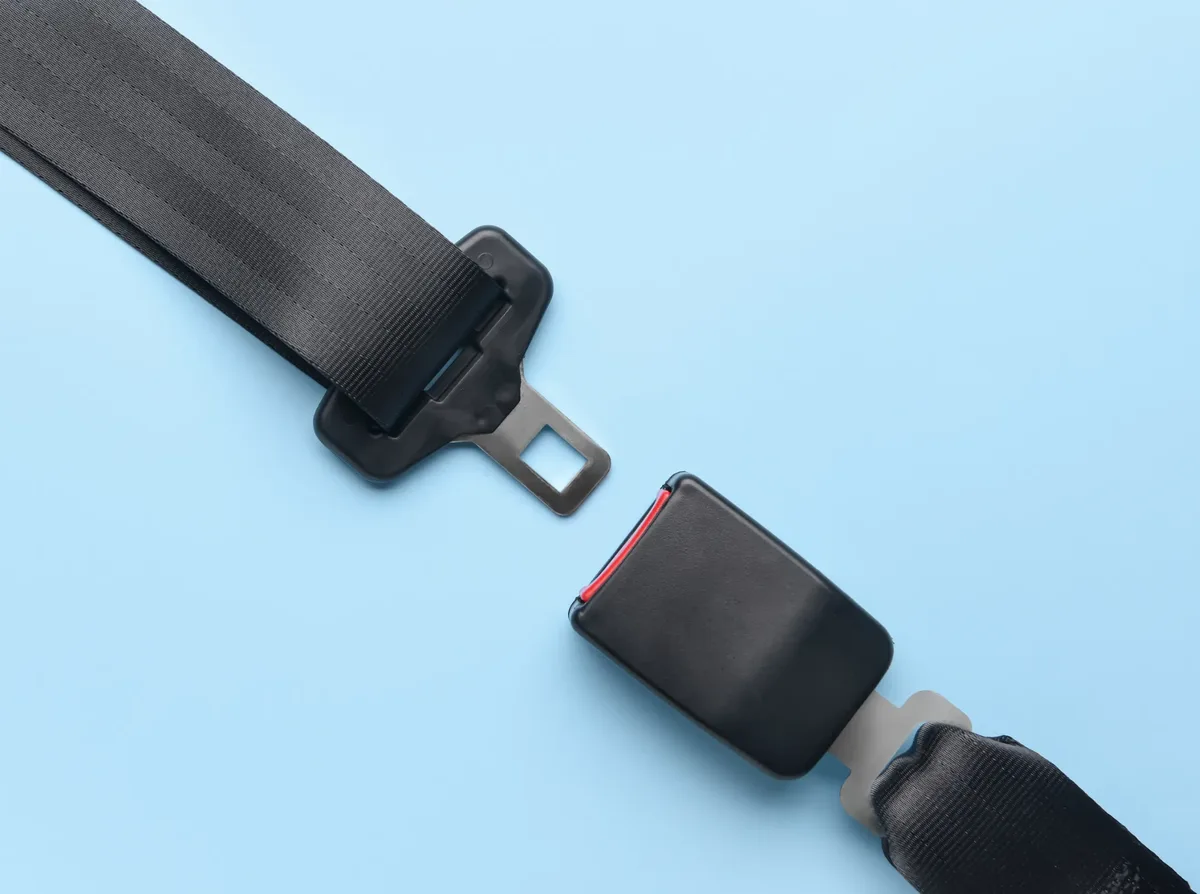
Seat belt tongue plate and buckle arranged apart on a plain surface showing both engaging faces

Fig. 05 — Interfaces are the expensive part to change; routing and selection are the flexible part

Responsible wording, deliberately

Throughout this page, manufacturing considerations are described in terms of what is taken into account rather than as claims about specific equipment, validated test procedures, production capacity or third-party approvals. Where a requirement calls for defined processes or documented evaluation, that is agreed as part of the project scope. Please ask — we would rather answer specifically than imply generally.

Start a conversation

Have a configuration in mind? Let us pressure-test it together.

Send the application detail and the arrangement you are considering. We will come back with the interfaces worth confirming and the questions worth answering before anything is committed.