A seat belt is one of the few components in a vehicle that a person interacts with directly, several times a day, for years. That familiarity makes routine visual awareness genuinely worthwhile — most visible deterioration will be noticed by someone who knows what to look at. It also creates a risk: familiarity makes it easy to stop noticing, and easy to overestimate what looking can tell you.
Before anything else
This article describes general awareness of restraint condition. It is not a substitute for the vehicle manufacturer’s inspection guidance, service schedule or replacement criteria for a specific vehicle or system. Where such guidance exists, it takes precedence. Where there is any doubt about a restraint system’s condition or history, it should be assessed by a qualified person.
What this article is, and is not
A visual check identifies obvious external deterioration and behavioural changes. It does not assess internal mechanism condition, does not evaluate load-carrying capability, and cannot determine whether a system has been affected by an event that left no external trace.
Understanding that boundary is what makes the exercise useful rather than falsely reassuring. A belt that passes a visual check has demonstrated the absence of visible problems — which is worth knowing, and is not the same as having been verified as sound.
Webbing condition along its full length
The most important habit in any visual check is this: draw the belt fully out.
Webbing wear concentrates at contact points — where it passes through guide loops and tongue plate slots, and where it winds onto the retractor spool. Several of those sections are hidden when the belt is in its normal retracted position. Checking only the visible portion of a belt means checking the part least likely to show anything.
What to look for
- Cuts and nicks, particularly along the edges, which contact hardware apertures directly.
- Fraying or pulled threads, which indicate the weave has been disturbed.
- Localised wear — a section that looks thinner, glazed or noticeably different from the rest.
- Hardened, stiffened or discoloured areas, which can indicate contamination.
- Contamination generally — oil, chemicals or substances whose effect on webbing is not proportionate to how they look.
Damaged webbing is a replacement matter, never a repair matter. Cutting, stitching, shortening or knotting webbing changes the load path in ways that cannot be assessed visually. The webbing article covers why in more detail.
Twisting and routing
Webbing should lie flat along its whole run, and the belt should follow its intended path.
A persistent twist is easy to overlook precisely because the belt still works. What changes is the contact geometry: a twisted section presents a narrower effective face, concentrating load where the design intends to spread it, and it changes how the belt sits against the occupant.
Routing is worth checking through the seat’s full range of movement, not just in one position. A belt that runs cleanly with the seat forward may foul on trim or on the seat frame when it is moved back or reclined — and chafing at a contact point will wear that section for as long as the arrangement persists.
Buckle engagement and release

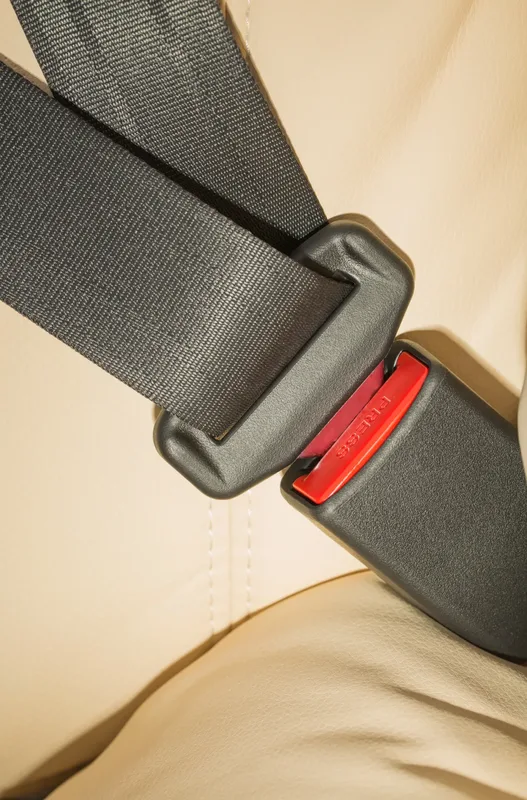
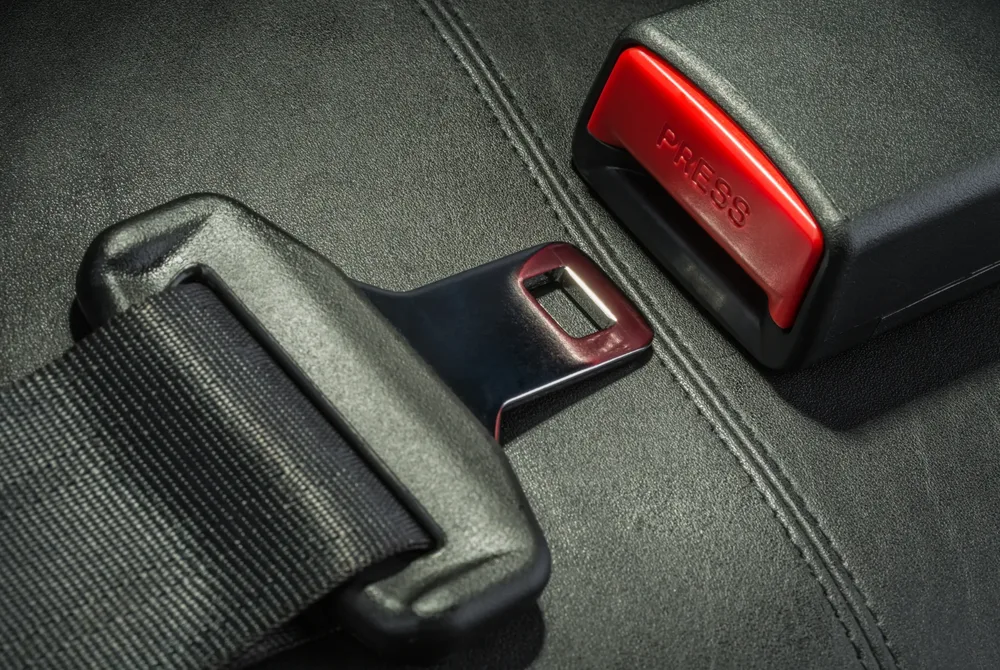
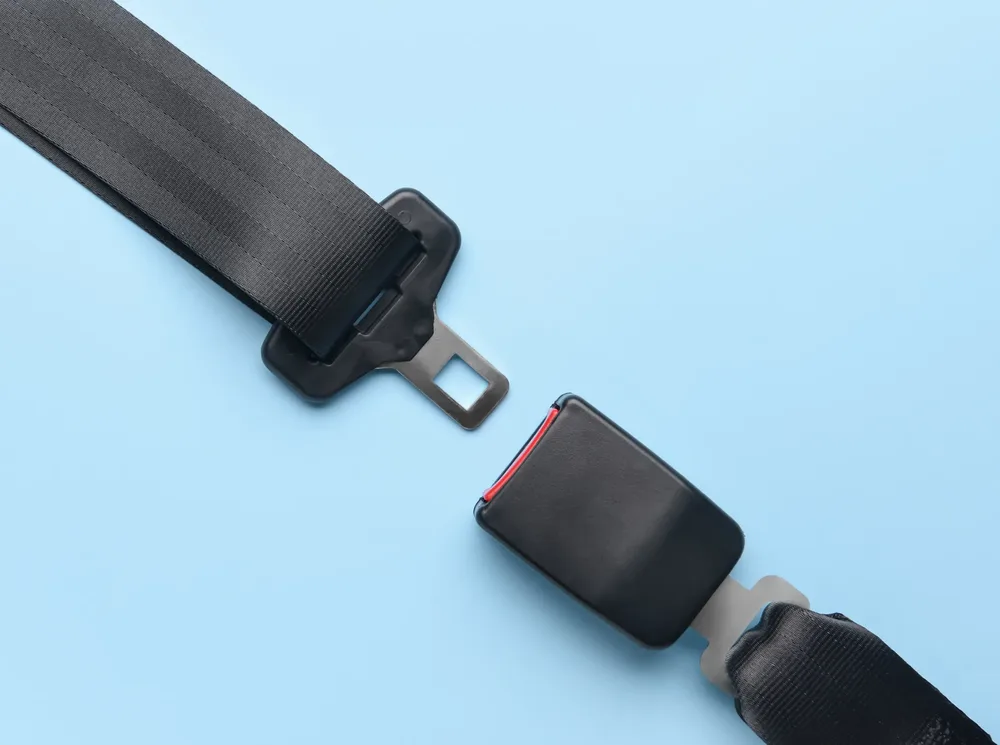
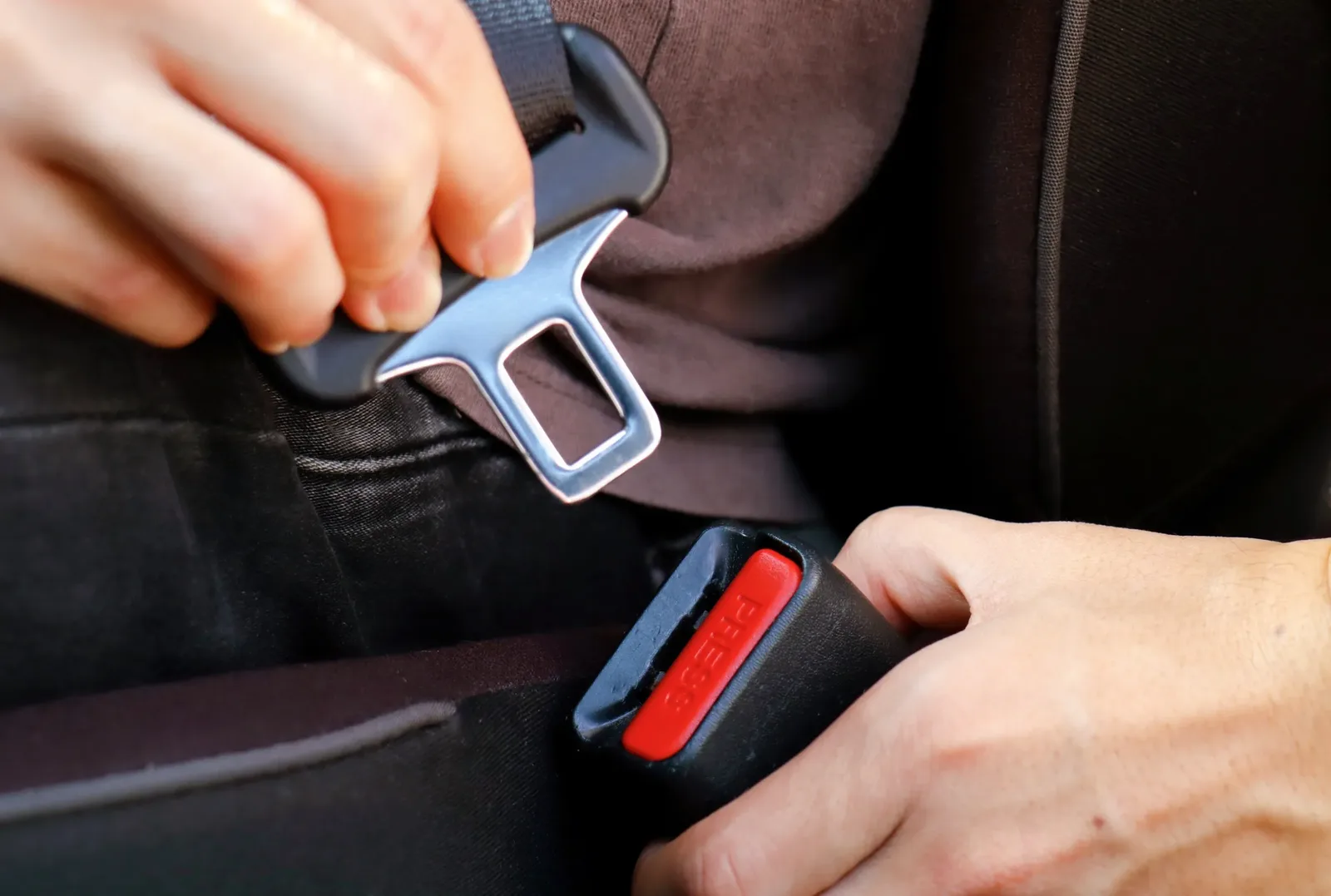
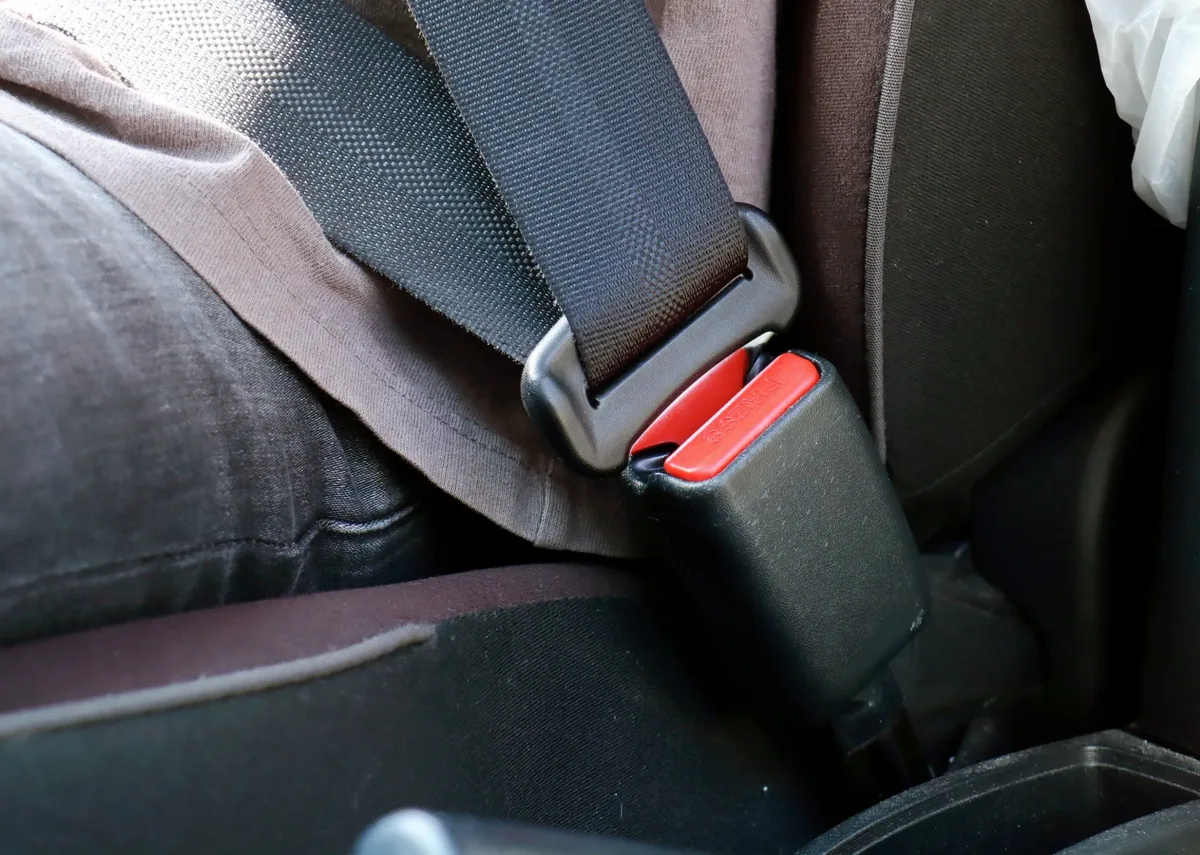
Engagement should be positive. The tongue should locate without hunting for the slot, and seating it should produce a clear, unambiguous result. Release should happen on the first attempt, in one action, with no secondary movement and no unusual force.
Things worth noticing:
- Needing more than one attempt to engage.
- Engagement that feels different from other belts in the same vehicle.
- Release requiring unusual force, or the tongue not leaving the buckle cleanly.
- Anything visible inside the buckle aperture — debris, coins, food, small objects.
Obstruction inside a buckle is a common and easily corrected condition, but it should be removed with care rather than forced. If a buckle behaves differently after clearing, that is worth having assessed.
Retractor behaviour
Webbing should pay out smoothly and return fully without assistance.
Because retractor behaviour is so consistent in normal use, changes are relatively noticeable. A belt that returns sluggishly, stops short of full retraction, needs to be fed back by hand, or locks during ordinary gentle movement is behaving differently from how it was designed to.
None of these observations identifies a cause. A retractor is an enclosed mechanism and its internal condition cannot be assessed from outside. The observation is the finding; the diagnosis belongs to someone qualified. The retractor article explains the normal behaviours these would be departures from.
Hardware and mounting condition
Visible metal and moulded components should be undamaged, unbent, and free from corrosion, cracks or sharp edges. Anything sharp is worth noting for two reasons: it suggests damage, and it will abrade webbing that runs across it.
Mounting points and their covers should be secure and undisturbed. Anything loose, deformed, obviously corroded or showing unusual wear should be assessed by a qualified person following the vehicle manufacturer’s guidance — not adjusted, tightened or worked around informally. Anchorage and mounting hardware ties the entire restraint into the vehicle structure, and it is not an appropriate place for improvisation.
The limits of a visual check
It is worth being explicit about what looking cannot establish.
- Internal mechanism condition. Retractors and buckle mechanisms are enclosed. Their internal state is not visible.
- Load-carrying capability. Webbing and hardware that appear sound may have been affected in ways that leave no external trace.
- System history. A visual check cannot reveal whether a system has been subjected to an event that would warrant replacement.
- Component authenticity or correctness. Looking at a fitted component does not confirm that it is the correct component for that position, or that it was designed to mate with what it is connected to. Suitability is a separate question from condition.
When to stop and refer
The most useful outcome of any awareness exercise is knowing when it has reached its limit. Refer to a qualified person, following the vehicle manufacturer’s guidance, in any of these circumstances:
- Webbing shows cuts, fraying, localised wear, hardening or contamination.
- Engagement or release behaviour has changed, or differs from comparable belts.
- The retractor no longer pays out or retracts as it previously did.
- Hardware is damaged, deformed, corroded or loose.
- The system’s history is unknown, or an event may have affected it.
- You are uncertain — which is itself a finding, not a gap to be reasoned away.
Uncertainty about a restraint system is information. It should be resolved by someone qualified rather than argued past.
Frequently asked questions
Follow the vehicle manufacturer’s guidance and service schedule for the specific vehicle, since that is the authoritative source. As a general habit, drawing the belt fully out and looking along it whenever the vehicle is being cleaned or serviced is a reasonable and low-effort practice.
No. Cutting, stitching, shortening or knotting webbing changes the load path in ways that cannot be assessed visually. Webbing showing cuts, fraying or localised wear should be replaced following the vehicle manufacturer’s guidance, not repaired.
It means the retractor is behaving differently from how it was designed to. The cause cannot be determined visually because the mechanism is enclosed, so it should be assessed by a qualified person in line with the vehicle manufacturer’s guidance rather than left in service in that condition.
It cannot assess internal mechanism condition, cannot evaluate load-carrying capability, cannot reveal whether a system has been affected by an event that left no external trace, and cannot confirm that a fitted component is the correct one for that position. It identifies visible deterioration and behavioural change — nothing beyond that.
A note on scope
This article provides general educational information about seat belt systems and their components. It does not constitute regulatory, safety or engineering certification advice for any specific vehicle. For any particular vehicle or restraint system, the manufacturer’s own documentation, inspection guidance and replacement criteria are the authoritative source and should always be followed.