The seat belt is one of the few pieces of engineering almost everyone uses daily and almost nobody thinks about. Its current form — webbing across the shoulder and lap, meeting at a buckle beside the seat — looks so obvious that it is easy to assume it was always there. It was not. Each element of that arrangement exists because an earlier arrangement had a specific shortcoming, and understanding those shortcomings explains a great deal about why restraint components are designed the way they are.
Before the car: restraint as an aviation idea
The idea of strapping an occupant to their seat did not originate with the automobile. Early aviation faced the problem far more urgently: aircraft manoeuvred in three dimensions, and an unrestrained occupant could be thrown clear of the seat in circumstances that had nothing to do with a collision. Simple lap straps appeared in aircraft well before they became common in road vehicles.
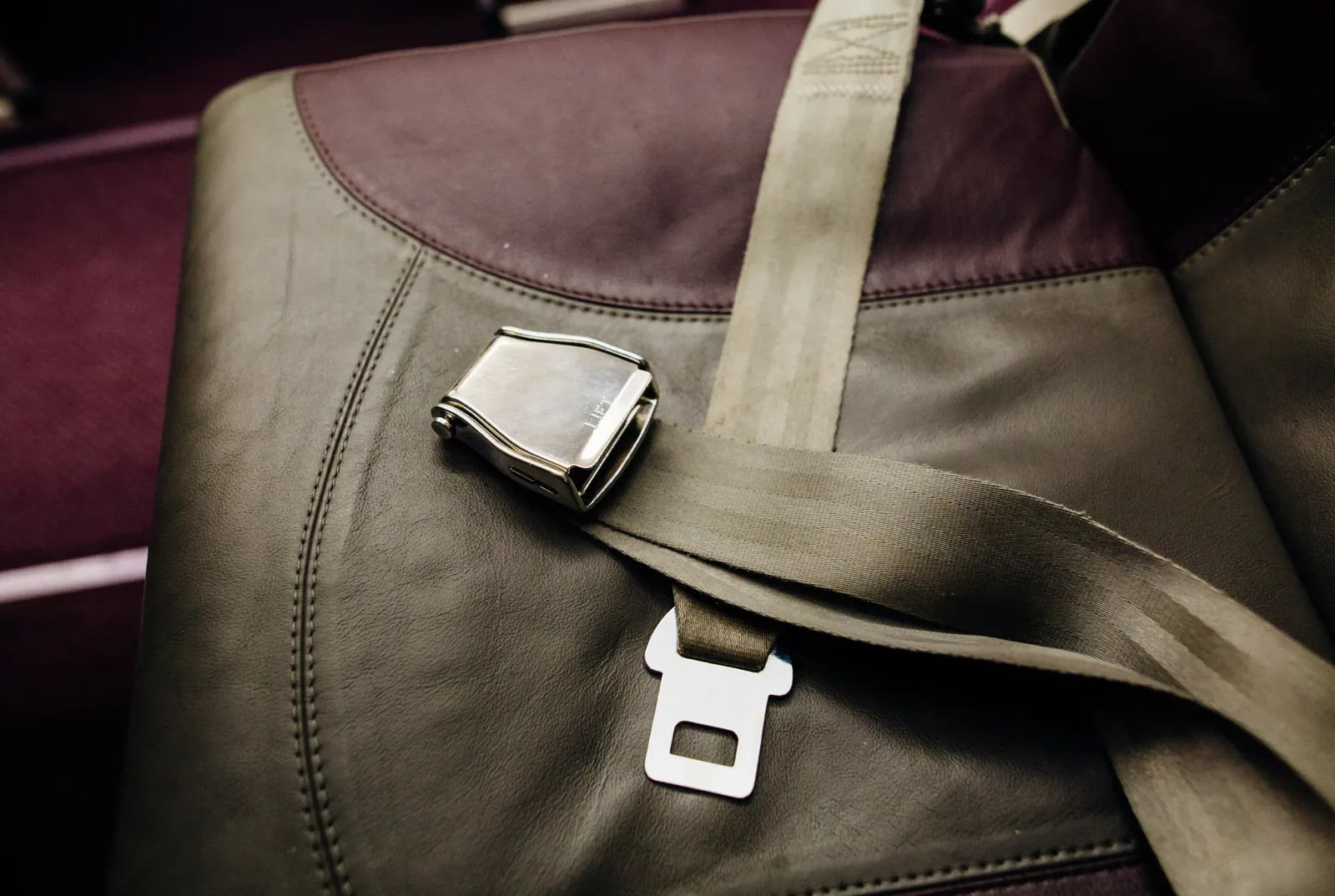
That heritage still shows in some hardware. Lift-latch buckles of the type used in aircraft cabins — where a hinged lever is raised to release the tongue — remain a recognisable design that predates the push-button automotive buckle and continues to be used in a variety of transport seating today.
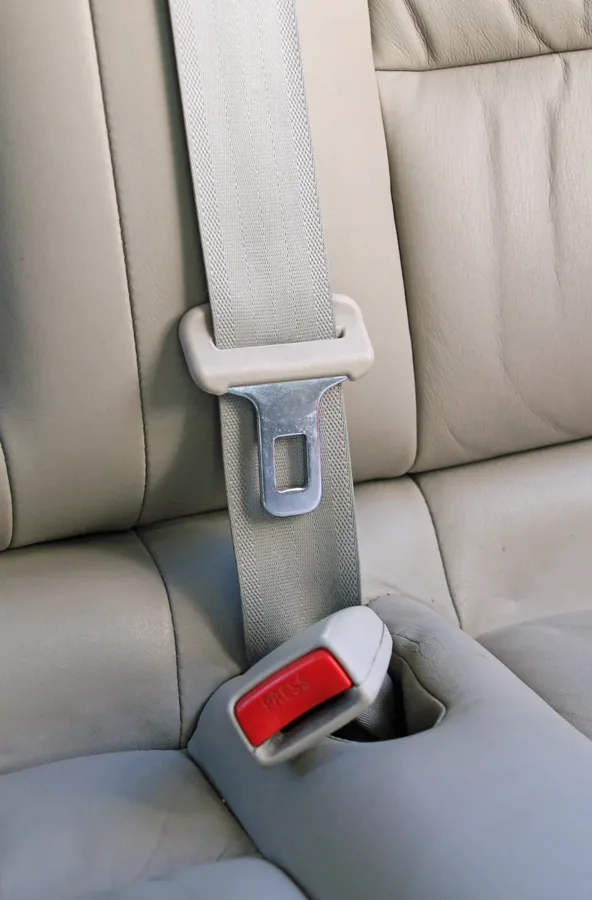
The lap belt and the problem it left unsolved
The first restraint arrangement to become widespread in road vehicles was the lap belt: a single band of webbing across the pelvis, anchored on either side of the seat. Its appeal is obvious. It is simple, cheap, easy to fit into almost any seating position, and quick to fasten.
It also works, in the specific sense that it does what it sets out to do — it keeps the occupant connected to the seat and prevents them from being displaced forward out of it. Against the alternative of no restraint at all, that is a substantial improvement.
But a lap belt restrains the pelvis and nothing else. The upper body remains free to rotate forward about the belt line. In a sudden deceleration, the torso and head continue moving even though the hips have been held. The occupant stays in the seat, but the upper body is not managed at all.
Why this mattered for component design
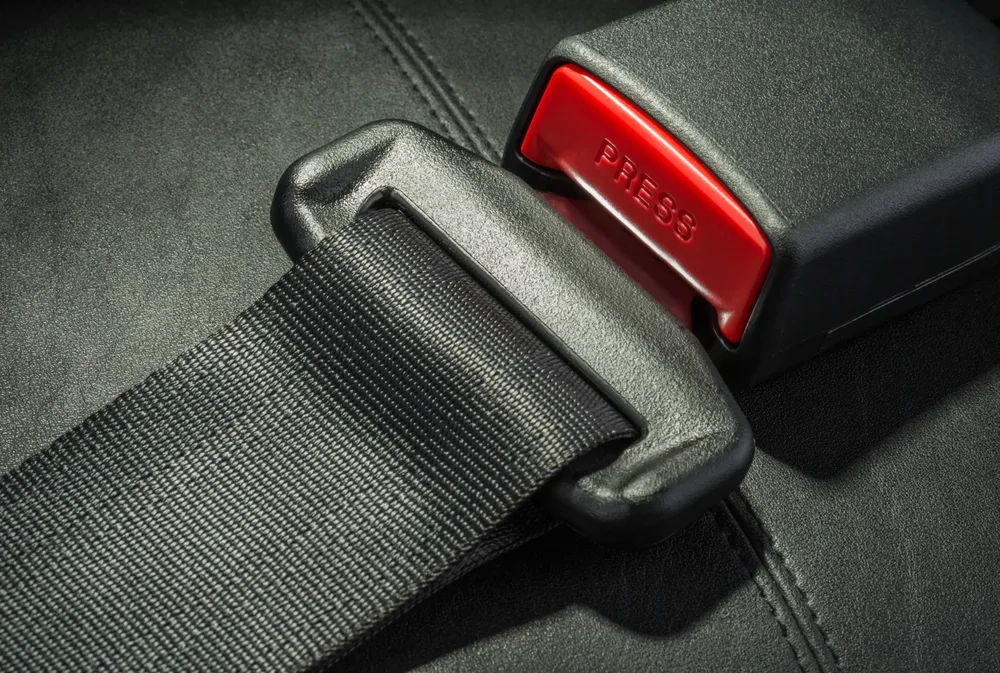
The lap belt established two things that never went away: webbing as the load-carrying medium, and a buckle as the deliberate connect-and-release point. Both survived every subsequent development. What changed was the geometry around them.
The three-point belt: one strap, two jobs
The decisive development in automotive restraint is widely documented: the three-point belt developed by Nils Bohlin, an engineer at Volvo, and introduced by the company in 1959.
Its insight is elegant enough that it is worth stating plainly. Rather than adding a second, separate strap for the upper body — which would require a second buckle, a second fastening action and considerably more effort from the occupant — Bohlin arranged a single continuous length of webbing so that it crossed both the lap and the shoulder, anchored at three points, and fastened with one movement of one hand.
This solved the lap belt’s core deficiency without introducing a new problem. The diagonal section restrains the torso, so the upper body is no longer free to rotate forward. The lap section continues to restrain the pelvis. Load is directed towards the parts of the skeleton better able to accept it. And crucially, the whole thing still takes one motion to fasten.
The three-point belt succeeded because it solved a safety problem without asking the occupant to do more work. That is the constraint every restraint design has faced since.
The ergonomic constraint that shaped everything
This point deserves emphasis because it explains so much of what came later. A restraint system only functions when someone chooses to use it, and uses it correctly. Every subsequent development — retractors, height adjusters, comfort features — can be read as an attempt to make correct use easier rather than merely to make the system stronger.
A design made deliberately easy to copy
The other widely documented aspect of the three-point belt’s history is what Volvo did with the patent: the company made the design openly available to other manufacturers rather than restricting it.
Whatever the commercial reasoning, the practical outcome is clear. The arrangement spread rapidly and became a common pattern across the industry, which in turn made it familiar to occupants everywhere. That familiarity is itself a safety property. A person who has fastened a three-point belt in one vehicle knows immediately how to fasten one in another, without instruction and without looking.
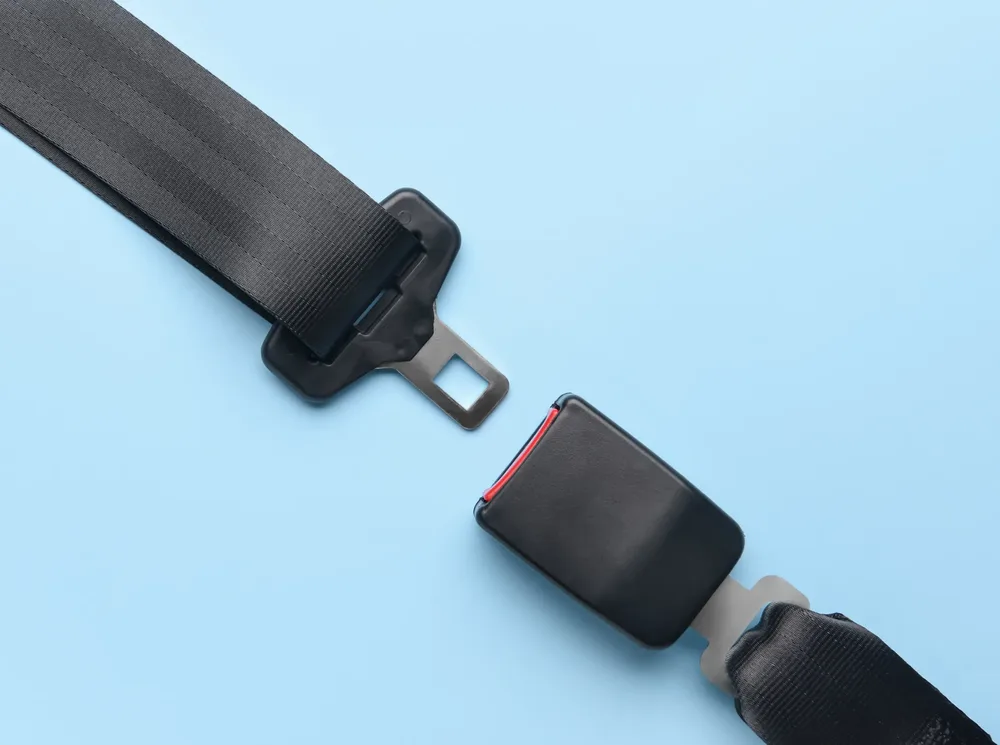
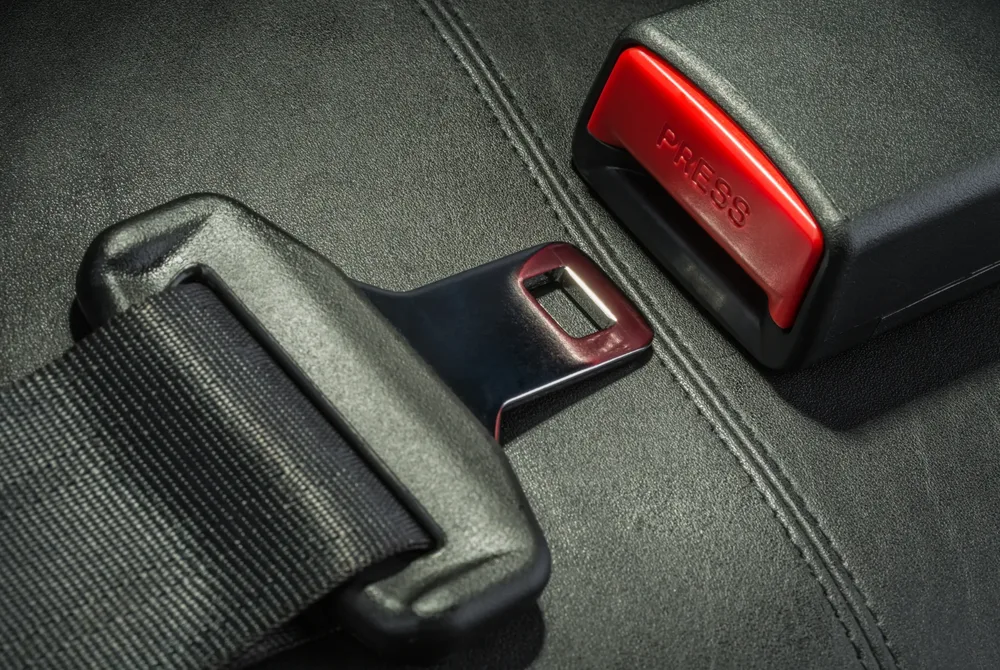
It is also the reason component interfaces became so consistent. Widespread adoption of a common arrangement created strong pressure towards compatible geometry — which is precisely why the question of what mates with what remains such a practical concern in restraint hardware today.
Retractors: solving the convenience problem
Early belts were adjusted by hand. The occupant pulled webbing to length, fastened it, and adjusted the fit manually. This works, but it introduces friction into a routine performed several times a day — and friction in a safety routine is a genuine problem, because it makes skipping the routine marginally more attractive.
The retractor addressed this. By storing webbing on a spool and taking up slack automatically, it removed manual adjustment from the process entirely. Reach, pull, fasten, done. When released, the belt returns itself rather than being left slack across the seat.
Locking behaviour
A retractor that simply paid out webbing freely would not restrain anything, so retractors incorporate a locking function: webbing can be drawn out under normal, gradual movement, but the mechanism restricts further extraction under conditions such as rapid webbing extraction or a sharp change in vehicle motion. This is the mechanism behind the familiar experience of a belt that lets you lean forward slowly but locks if you move quickly.
The result was a belt that was easier to use than the one it replaced. That, more than any structural improvement, is why retractors became universal. A more detailed look at retractor function is available here.
Layered systems and the modern arrangement
Contemporary vehicles treat the seat belt as one element of a coordinated arrangement rather than as a standalone device. Belt systems in modern vehicles are commonly designed to work in conjunction with other restraint features, with the belt itself remaining the primary means of keeping the occupant connected to the vehicle structure and correctly positioned.

Refinements have also continued at the component level — belt height adjustment to suit different occupant statures, improvements in webbing construction and finish, buckle designs that engage more positively and release more clearly, and retractors that behave more smoothly across their cycle. Individually, none of these is dramatic. Collectively they are why a belt in a current vehicle is noticeably more pleasant to use than one from several decades ago while doing fundamentally the same job.
What the history actually teaches
Three things stand out from this trajectory, and all three remain directly relevant to specifying restraint components today.
1. Geometry is the design
The step change from lap belt to three-point belt was not a materials advance or a manufacturing advance. It was a change in where the webbing ran. This is why anchorage arrangement and belt path receive so much attention when a restraint system is specified — geometry is where the performance lives.
2. Usability is a safety property
Every major development made the system easier to use correctly. A component that is awkward to handle, uncomfortable to wear or ambiguous to release undermines the system in a way that no amount of structural capability compensates for.
3. Standardisation created compatibility — and the expectation of it
Because the three-point arrangement became near-universal, occupants and installers alike expect components to be interchangeable. Often they are broadly similar. But similarity is not compatibility: components are still designed as mating pairs, and confirming that a tongue plate and buckle were designed for one another remains a necessary step rather than a formality. This is discussed further in our quality and engineering notes.
Frequently asked questions
The three-point seat belt is widely documented as having been developed by Nils Bohlin, an engineer at Volvo, and introduced by the company in 1959. Volvo subsequently made the design openly available to other manufacturers, which contributed to its rapid adoption across the industry.
A lap belt restrains the pelvis but leaves the upper body free to rotate forward about the belt line. The three-point arrangement adds a diagonal section that restrains the torso as well, while still fastening in a single movement — so it addressed the lap belt’s main limitation without making the belt harder to use.
A retractor stores webbing on a spool, allows it to be drawn out as the occupant moves, and takes up slack when the belt is released. It removed the need for manual length adjustment, which made belts significantly easier to use — and a belt that is easier to use correctly is more likely to be used correctly.
The fundamental geometry has proved remarkably durable — three anchorage points, one continuous run of webbing, a single fastening action. What has changed is refinement: retractors, height adjustment, improved webbing construction, better buckle engagement and integration with other vehicle restraint features.
A note on scope
This article provides general educational information about seat belt systems and their components. It does not constitute regulatory, safety or engineering certification advice for any specific vehicle. For any particular vehicle or restraint system, the manufacturer’s own documentation, inspection guidance and replacement criteria are the authoritative source and should always be followed.